We spent almost two weeks in the Galapagos Islands – we visited three of the four inhabited islands (Santa Cruz, Isabela and San Cristobal) and took several day trips to various other smaller islands and sites around the main population centres.
We decided that rather than post for the days that we spent on each island, or each day trip individually, we’d group things up as follows:
- Things we saw under (or in) the water
- Things we saw on land
- Land we saw on land
- Other things we learned
- Plastics
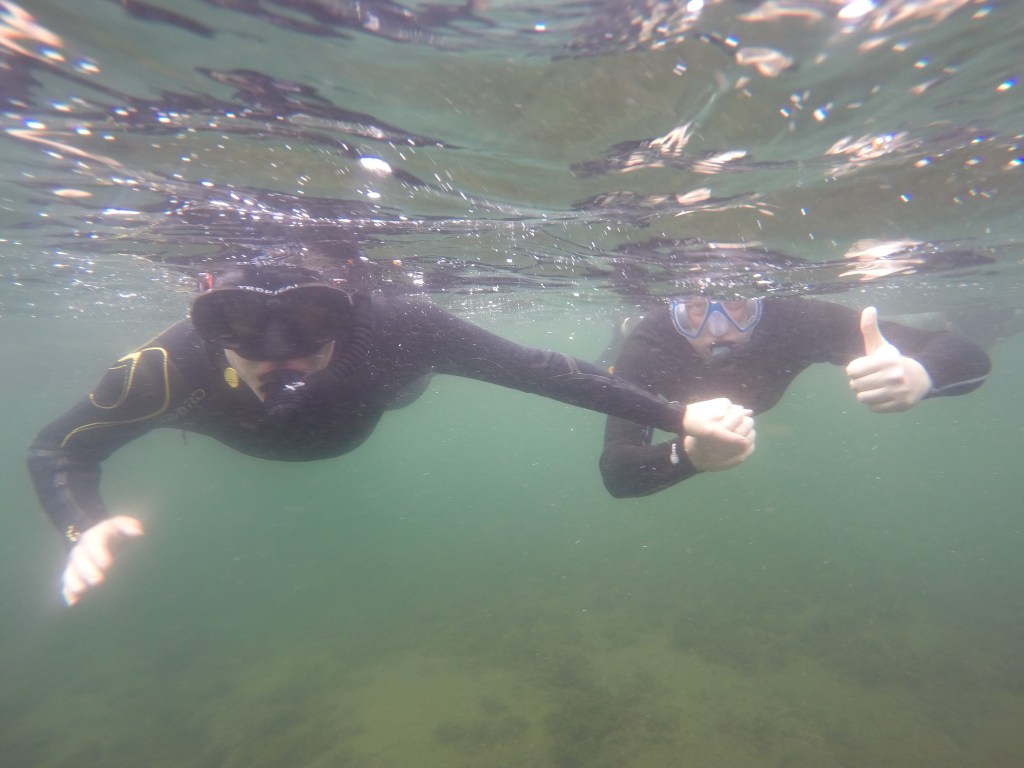
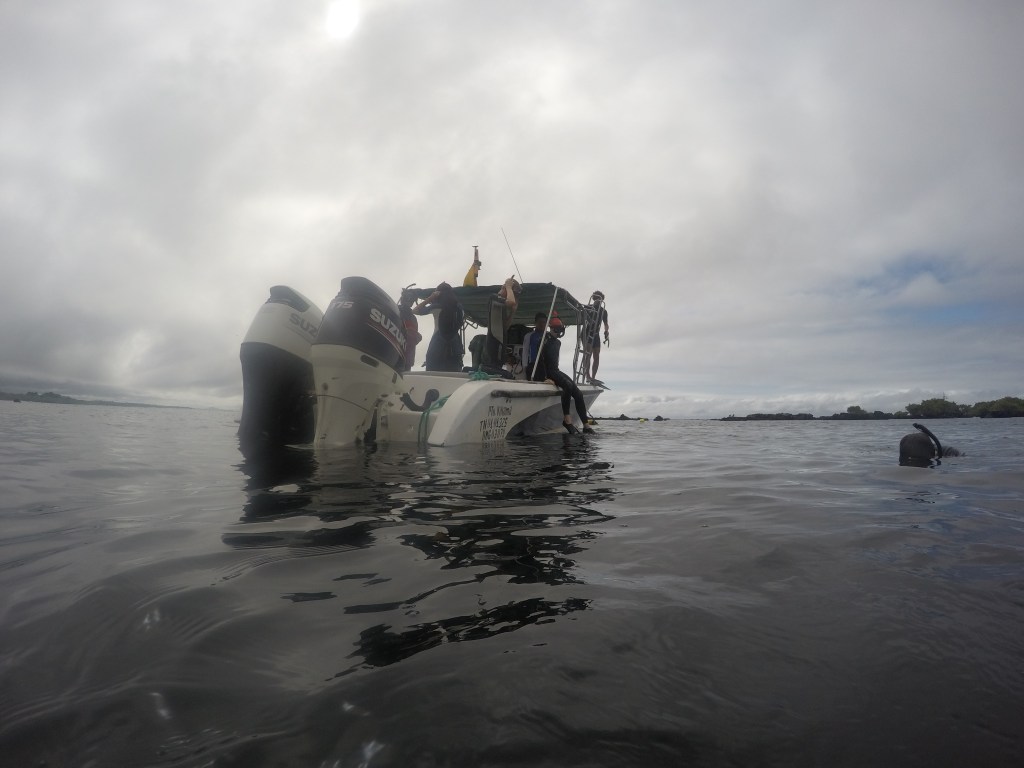
Bear with us…we have lots to share! Our water-based adventures included ferry rides, day trips by boat, snorkeling, diving, surfing, kayaking, and general self-guided beach wanders. This post is going to focus on the water-based wildlife we saw. Ready to join us for a swim?
Isla Isabela was the second island we visited, and probably our favourite. The best snorkeling we had was during a day trip to a site called “Los Tuneles” – an otherworldly landscape of collapsed lava caves that are filled with seawater. This was also the site of the Blue Footed Booby close-up sightings that we talk about in the “Things we saw on Land” post.
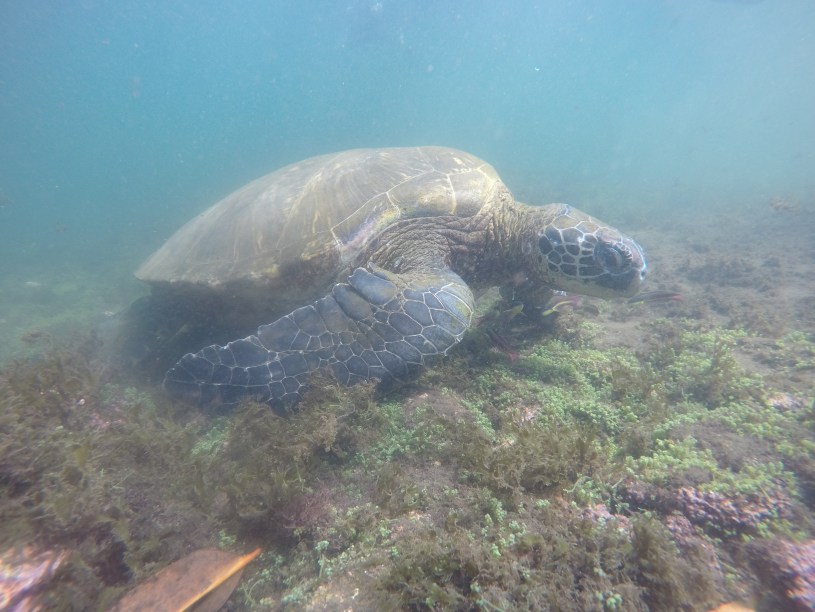
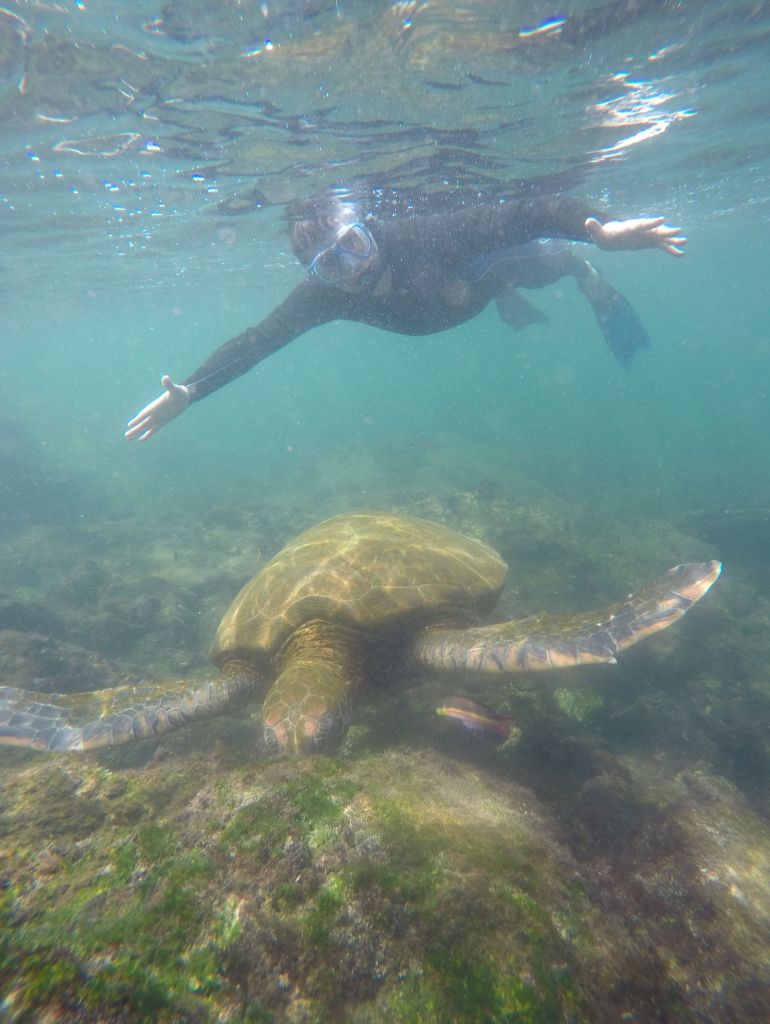
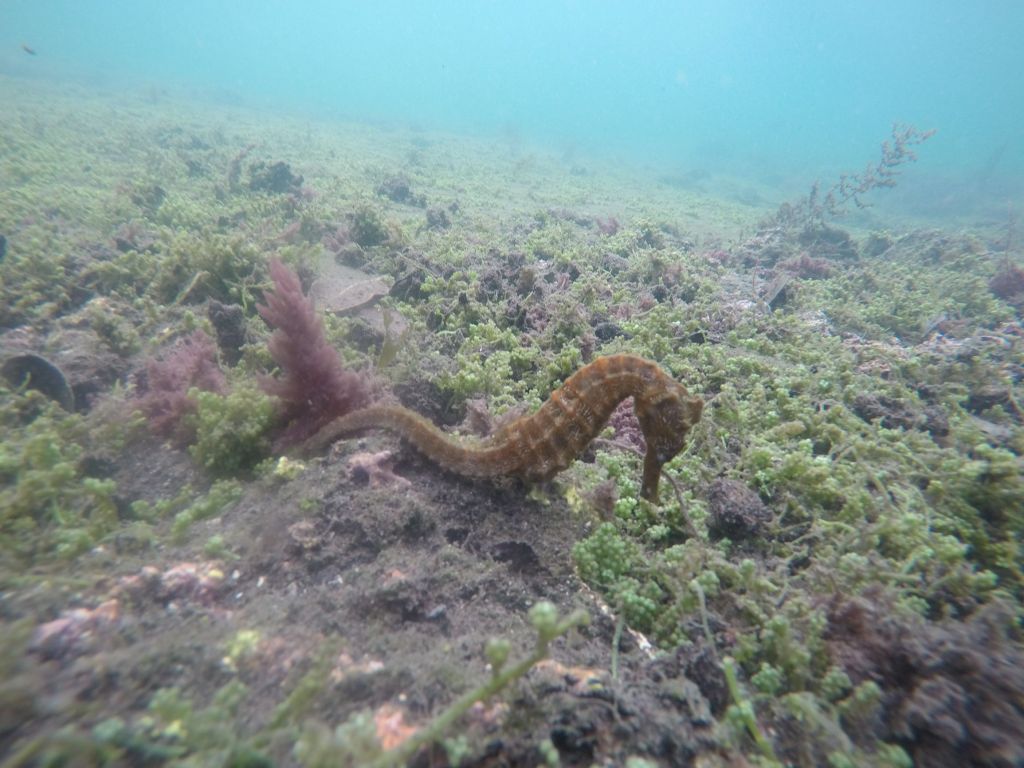
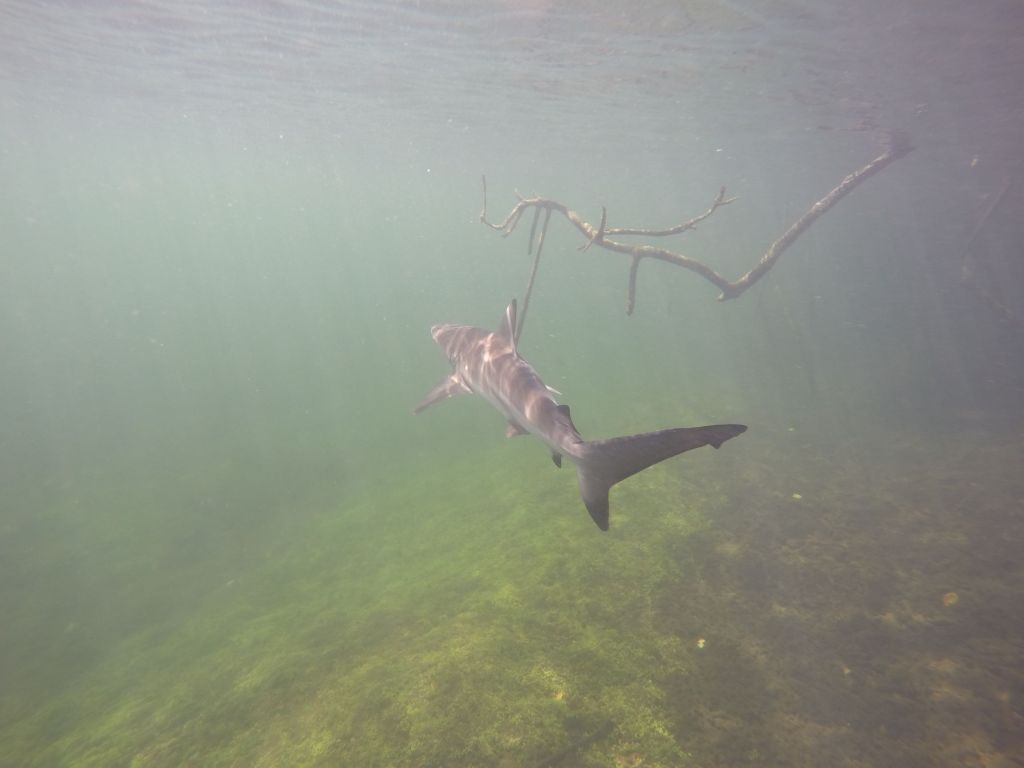
At Los Tuneles, we swam with sea tortoises bigger than we were, baby sharks (black-tipped and white-tipped reef sharks), adult sharks about 4-6 feet long (many resting quietly on the sandy bottom, or snuggled in caves in groups of three our four), seahorses, eagle rays, and fish of all sorts.
As we were there during the cooler, wetter “drizzle” season (as opposed to the dry season), the water temperatures was cold and the visibility was low. This is because the drizzle season is partly characterized by the arrival of cold water masses moving up from Antarctica full of tasty nutrients the animals like to eat, which makes wildlife more active, but also a bit harder to see. That said, “low visibility” by Galapagos standards still means 8 – 12m or more, depending on the site!
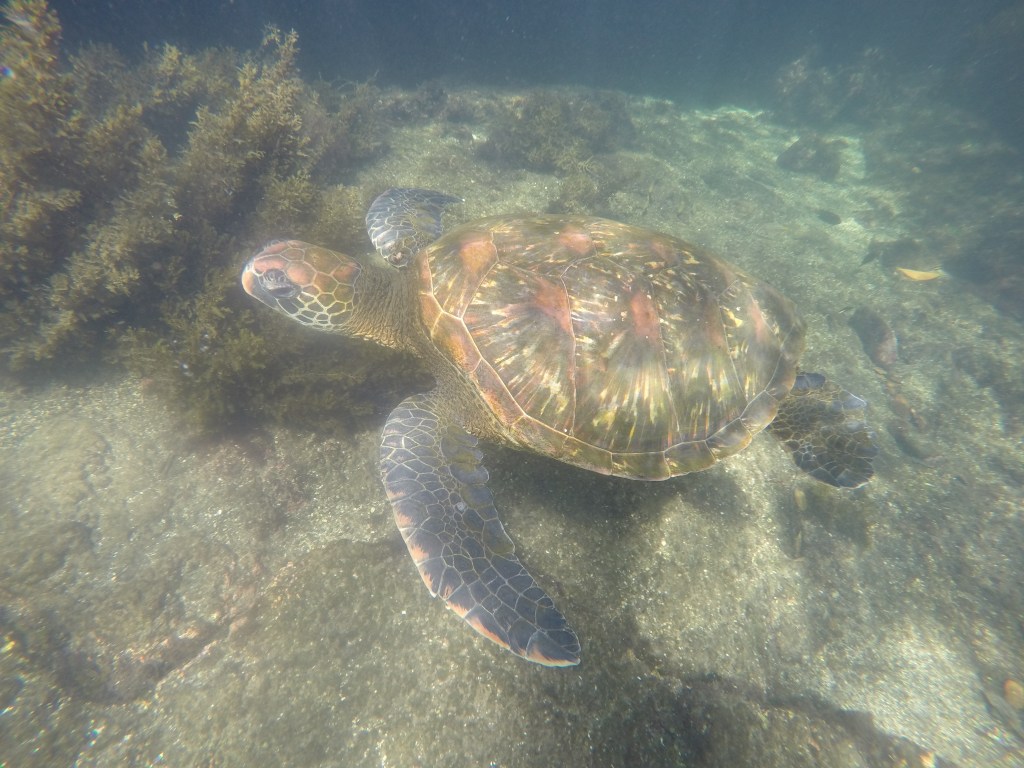
The Sea Tortoises have no regard for humans at all. The frequently-signposted Galapagos National Park rule is that you must stay at least 2m from any wildlife… but no one has told the wildlife about this rule! The tortoises will swim right up beside you and startle you.
The seahorses were a real highlight for me – so small and strange. The guides (on all of our tours) were incredible in their ability to spot things.
Swimming so close to sharks was also amazing. This area was a sort of nursery for the black-tipped and white-tipped reef sharks, and we saw so many we lost count. I also saw a hammerhead shark on one of my dives, which was also pretty special.
Also pictured in that last video are some Eagle Rays we saw on the same snorkeling expedition. Here they are on their own:
We did a one-day dive trip out of Isla Santa Cruz – Bryn tried a Discovery Dive for the first time, while I did a couple of drift dives with the rest of the group. The first site was Daphne Meynor, the second North Seymour. Most of the good stuff was from the Daphne Meynor site.
First were the Mantas – the giant ones. We’d seen a few of these from the boat, as they like to bask near the surface to warm up, and sometimes leap out of the water. You can just see the dark shape at the surface in the first photo.
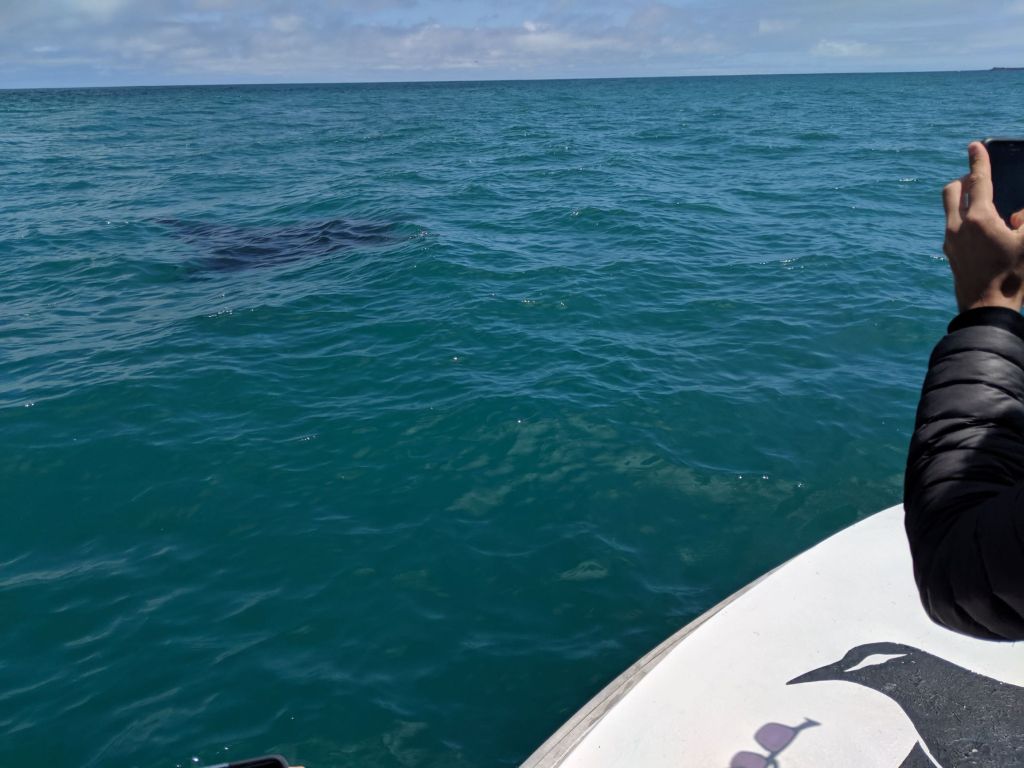
Some Sea Lions came to keep us company during the dive as well.
Sea Lions are ridiculous creatures (more on these in the “things we saw on land” post), but they sure know how to have fun. They seem to be living a really good life out there on the islands.
That’s Bryn getting up on a wave in that last video there! We took a surfing lesson on one of our last days on Isla San Cristobal with Nico, the owner of the hostel we were staying in. Nico (like many of the residents we met) is a man of many talents: polyglot, entrepreneur, conservationist, National Park guide, business owner…conversations with Nico were some of the ones that helped inform our “Other things we learned post”.
We saw some bottlenosed dolphins from the ferry on our way back from Isla Isabela to San Cristobal, just playing and hanging out in the wake.
The highlight of this whole menagerie for Bryn was the Galapagos Penguin. They’re tiny little guys, and a colony of about 7-10 lives on the edge of the harbour on Isla Isabela. You can rent a kayak (which we did) and paddle over to say hi to them and other creatures who live nearby. Follow the paddle along to the tip, and you can see the penguin standing on the rock on shore.
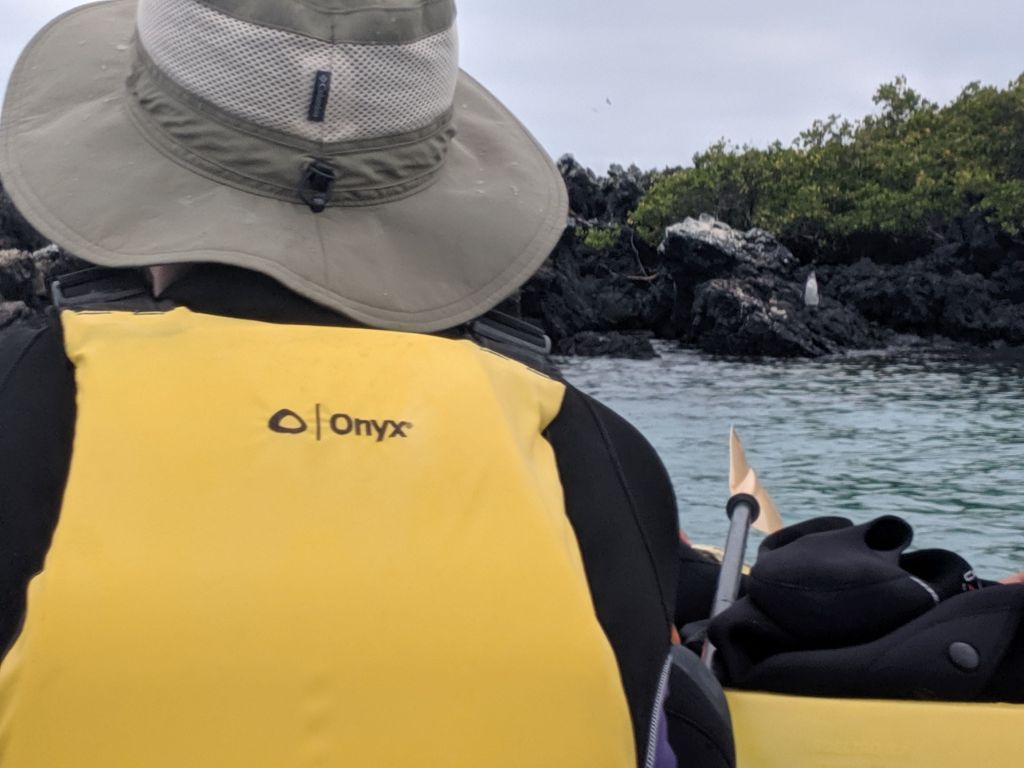
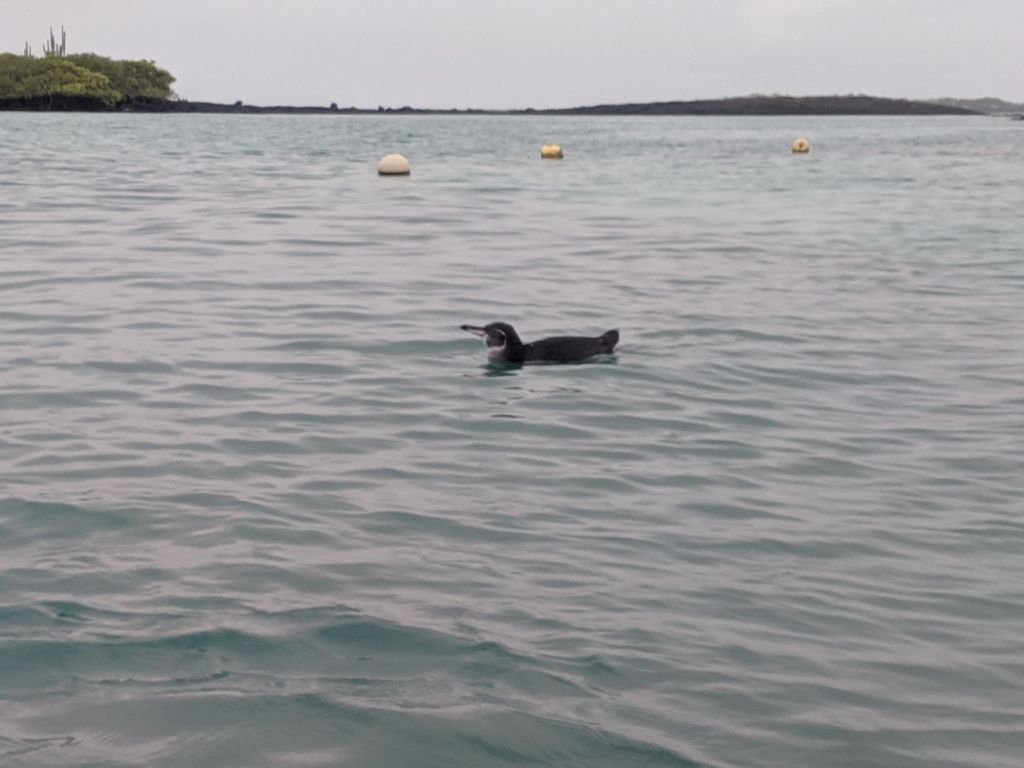
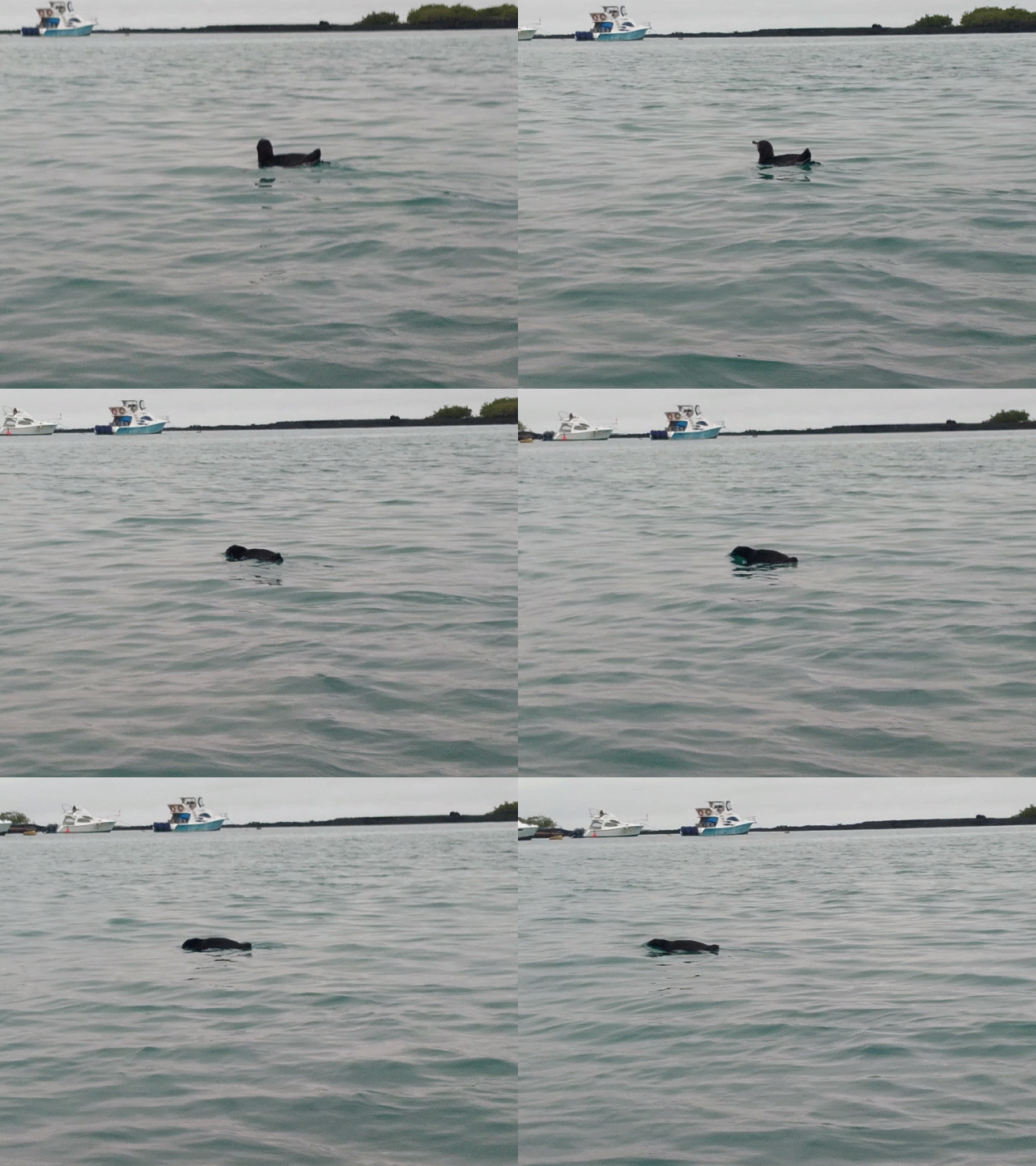
The most depressing thing we saw in the water was plastic. So. Much. Plastic. So much plastic that we felt compelled to write an entire post just about that. It won’t be uplifting, but it’s important.
So as not to close on too much of a down note, here’s one last video of a Sea Lion rolling around in the surf. We saw them doing this a fair bit…they look like they’re just napping in the shallows, being rocked by the waves.
 Honeymoon? Sweet!