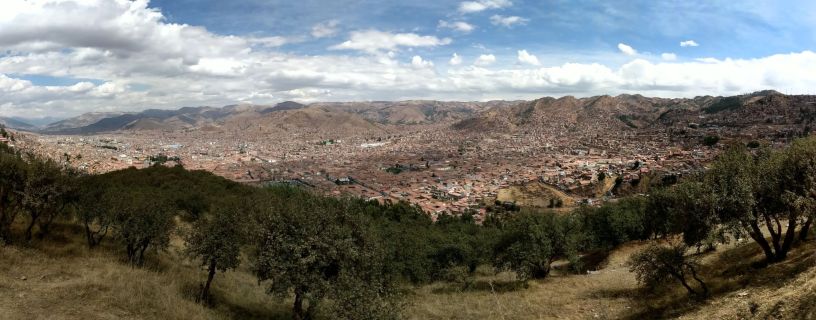
We arrived in Cusco on August 31st, and stayed in the vicinity until September 11th. The highlight were the four days we spent hiking the Inca Trail to Machu Picchu, but we’ll make a separate post about that. We spent lots of time here before the hike to make sure we were well acclimatized to the altitude before we embarked on our trek, and then several days after the trek to recover.
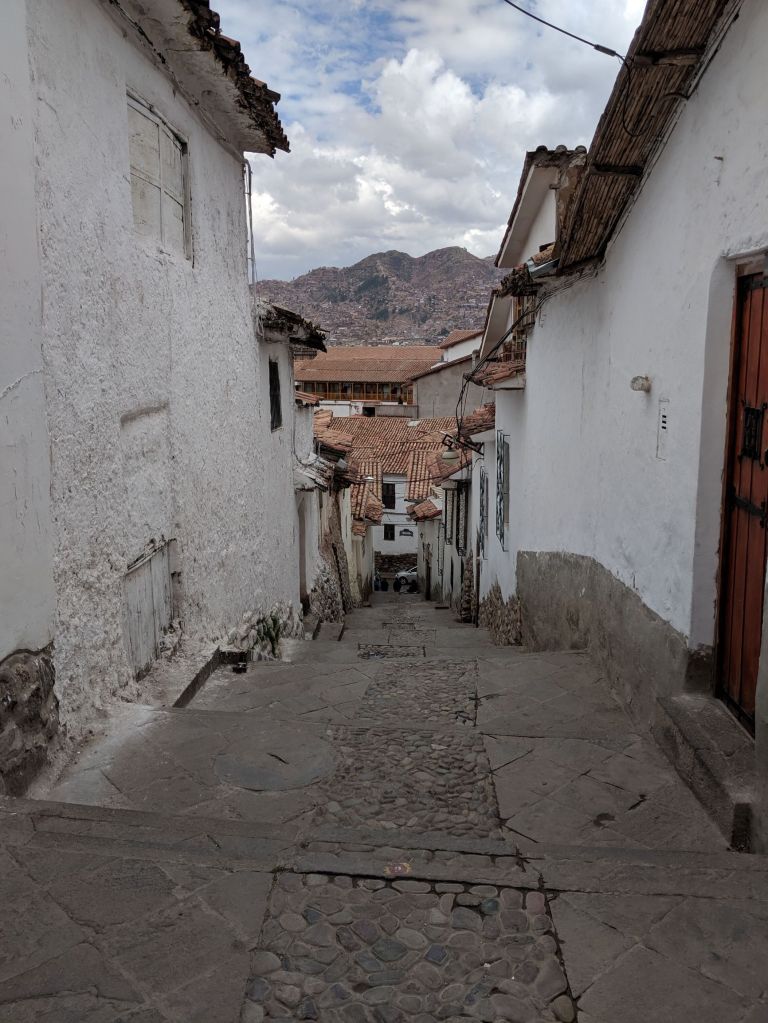
Cusco is located in a valley at 3,400m above sea level and was the capital of the Inca empire. At its height, the empire stretched from modern Ecuador to Chile, encompassing much of Peru, Bolivia, northwest Argentina and a portion of Colombia. The Inca referred to their empire as Tawantinsuyu, a descriptive term which essentially means “the union of four provinces”. The corners of the four provinces met in Cusco.
The term Inca (or Inka) technically means ‘ruler’ or ‘lord’, and was used to refer to the ruling classes or families – this means the Incas were only a small percentage of the overall population of Tawantinsuyu (perhaps 15-40,000 people, according to recent estimates), most of whom would have belonged to various other Andean cultural backgrounds. The empire had three official languages, including Quechua and Aymara, which are both still widely spoken. Most of the names we have for Incan sites are from the Quechua language. Current estimates place the total population of Tawantinsuyu around the time of Spanish colonization at between 10 and 12 million.
Interestingly, the Inca empire only lasted about 150 years. Significant expansion occurred under Pachacuti (the second Inca) and his son, Tupac, and Pachacuti is considered to be the likely builder of Machu Picchu. He is known to have reorganized the empire into the four provinces with one central government in Cusco, and four provincial governments.
The area in and around Cusco is peppered with archaeological sites, and we were lucky to visit several in the Sacred Valley and in Cusco proper.
The Sacred Valley
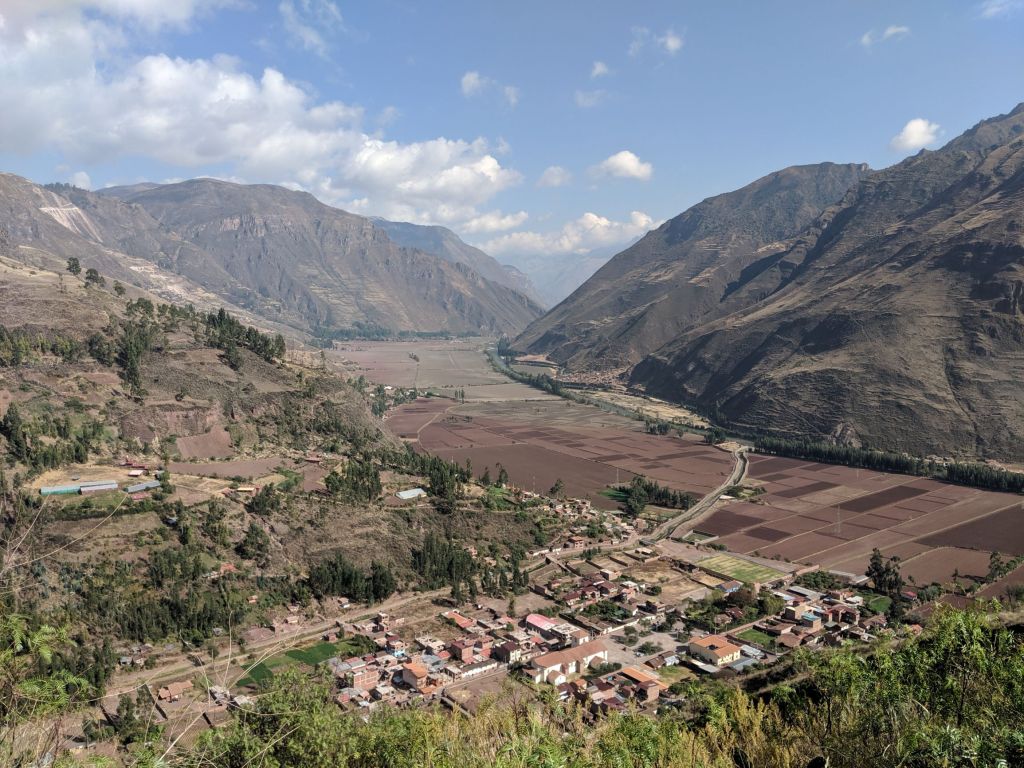
The Sacred Valley (pictured above) is about 20km from Cusco, and winds its way in a vaguely northwesterly direction, roughly parallel to the valley that Cusco is located in. From Pisac at the southeastern end, past Urubamba and Ollantaytambo and on to Kilometer 82 (as the start of the Inca Trail trek is known) the valley stretches about 70km.
The valley was (and is!) a booming agricultural centre, supplying Cusco and other cities in the surrounding area. In Incan times, the valley was an important source of high-quality food year round. The river in the valley bottom was considered sacred, and provided irrigation for water-loving crops that would otherwise not thrive in the arid, high-altitude climate.
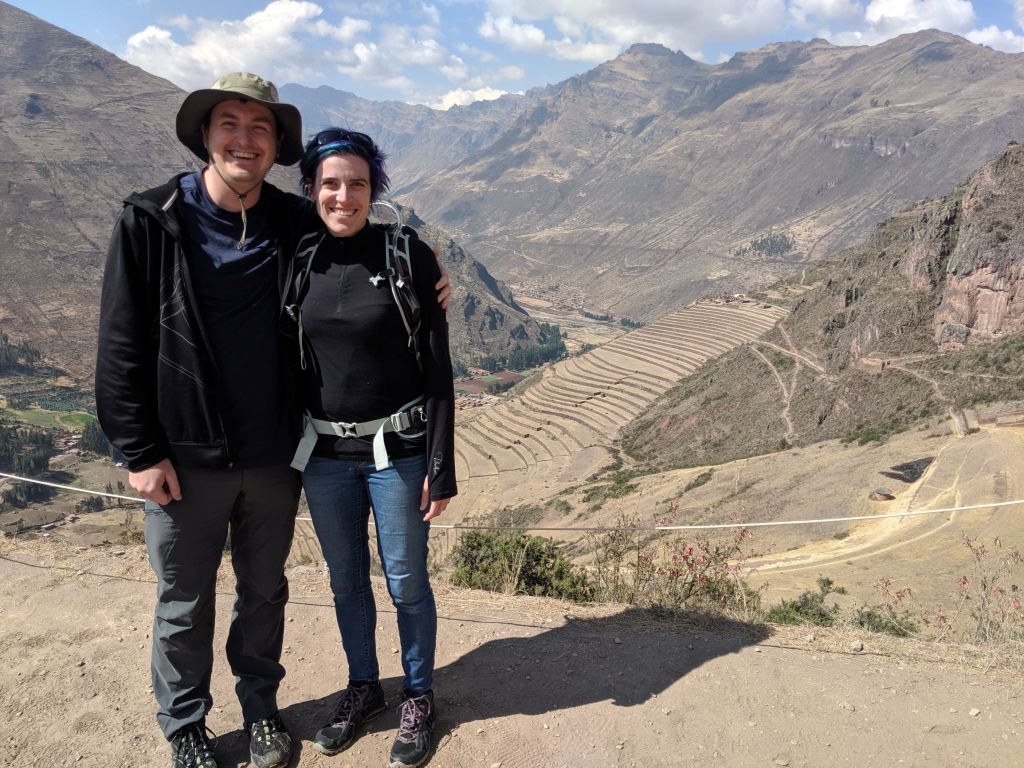
The first site we visited was Pisac (elevation about 2900m), a key settlement in the valley that included substantial agricultural terraces, an urban area, a religious centre, and military presence. Scale in the Andes is hard to convey – each of the terraces in the background is about 3m high. Pisac was a major agricultural site – most of it is terraces – and likely coordinated the supply of food from the valley back to Cusco. In Incan times, the valley bottom would also have been farmed, and as the population increased, terraces began to crawl up the valley walls. Driving through the valley today, you can still see the remains of Incan terraces throughout – some are still being farmed by local families.
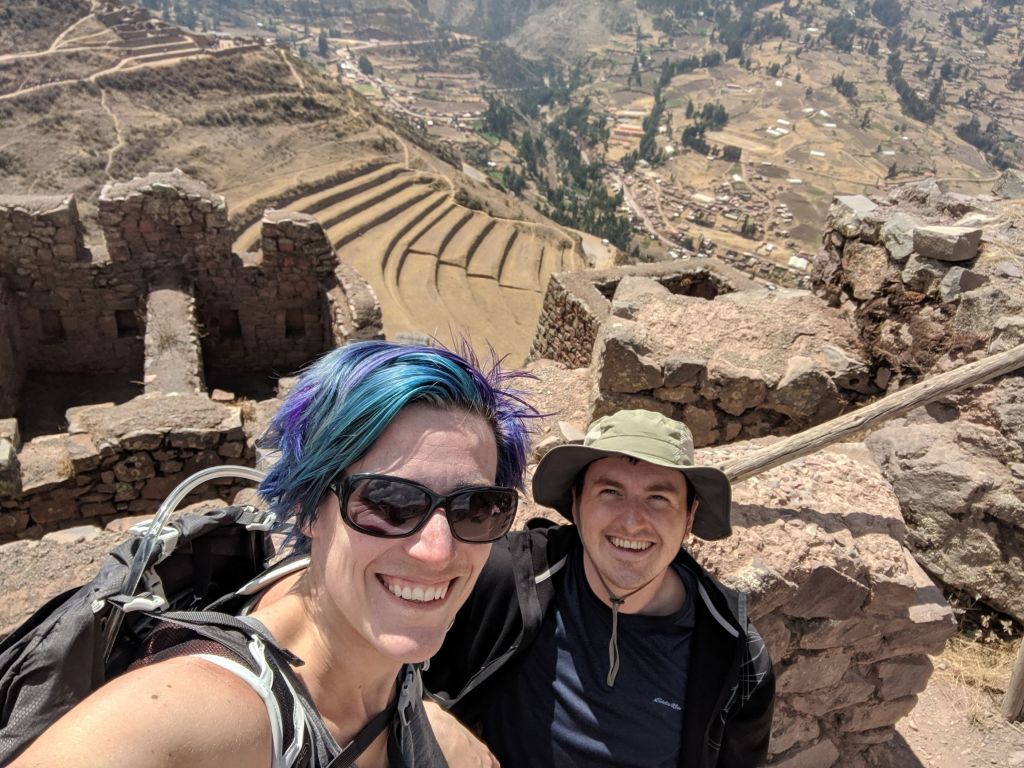
Right about now we realised how difficult it is to take photos that do these sites justice. This next photo was taken from the urban area of Pisac looking back toward where we were standing in the first photo (in the top left).
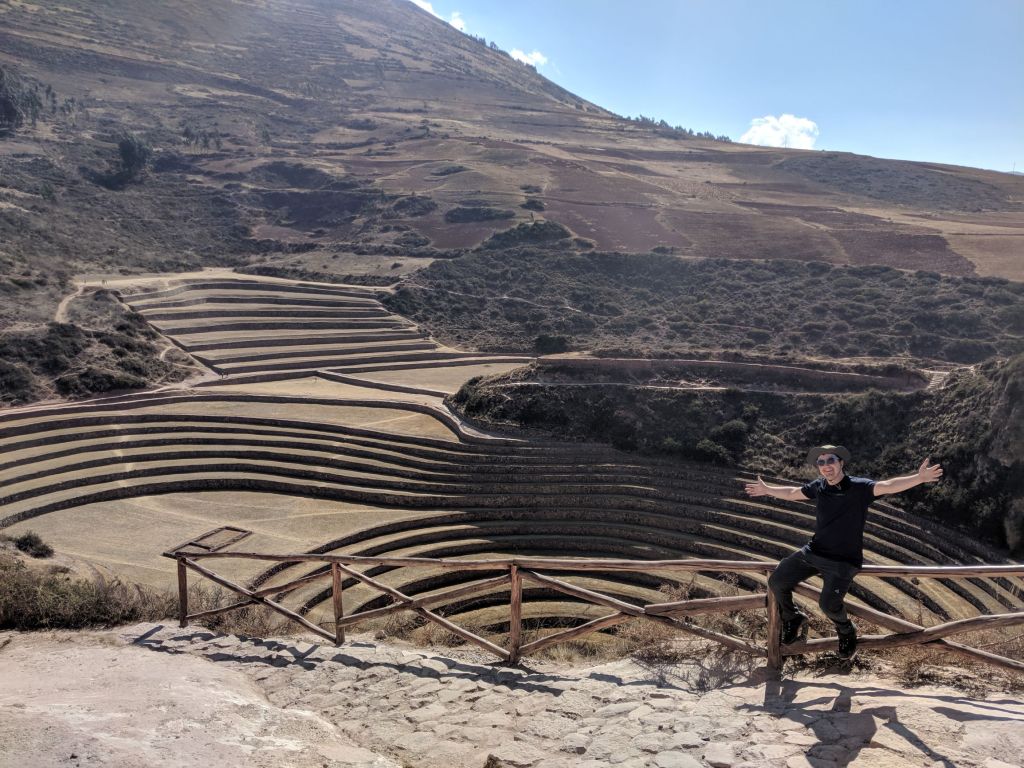
The archaeological site at Moray offers concrete proof of the importance of agriculture for the Incas (of course – everyone needs to eat). Located on the plateau above the valley, at an altitude of about 3500m, archaeologists have established that Moray was an agricultural laboratory. Sheltered in a natural bowl, each terrace here enjoys a slightly different microclimate, and archeologists have found that the terraces were built with soils from different parts of the Incan empire so they could experiment with potato, corn, and quinoa varieties to fine-tune growing requirements and ensure sites in other locations were growing the most efficient crops.
This wasn’t a small operation. With a population of over 10 million to feed, there wasn’t a lot of room for error. Historians are divided on how the Incan economy functioned, but there does seem to be consensus that it operated without money or markets, on a reciprocal system that may or may not have been somewhat socialist.
All that to say – Moray wasn’t messing around. Three huge crop research bowls and the foundations of as least one large seed-storage building have been excavated and partially restored.
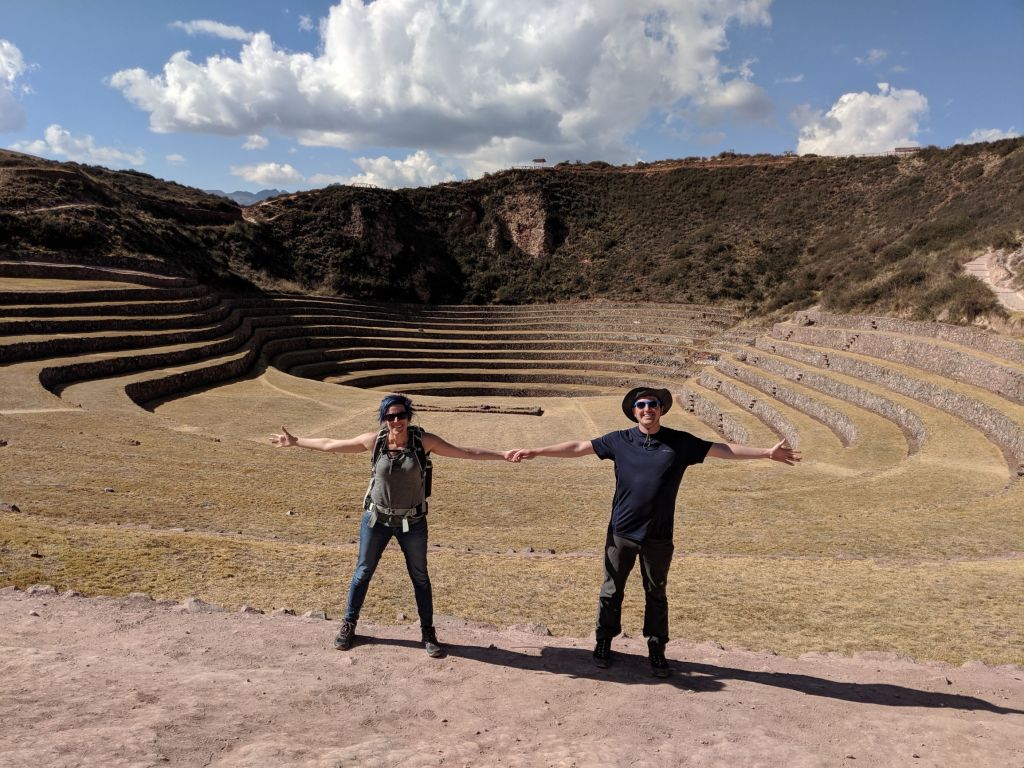
Moray Lab 1 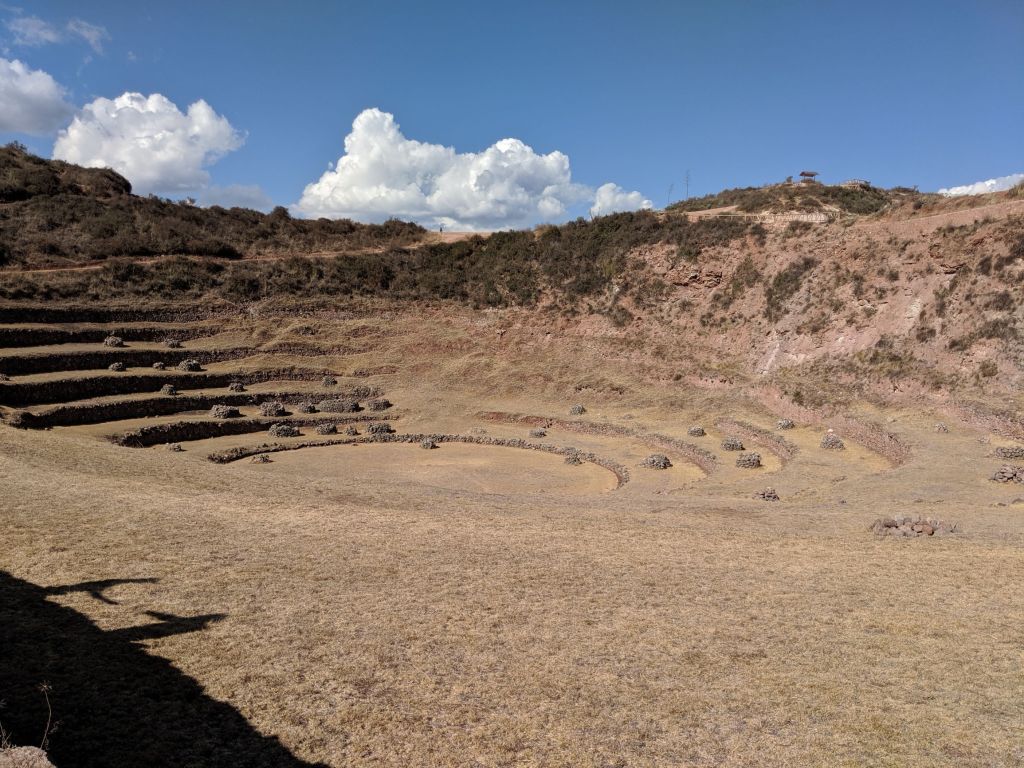
Moray Lab 2 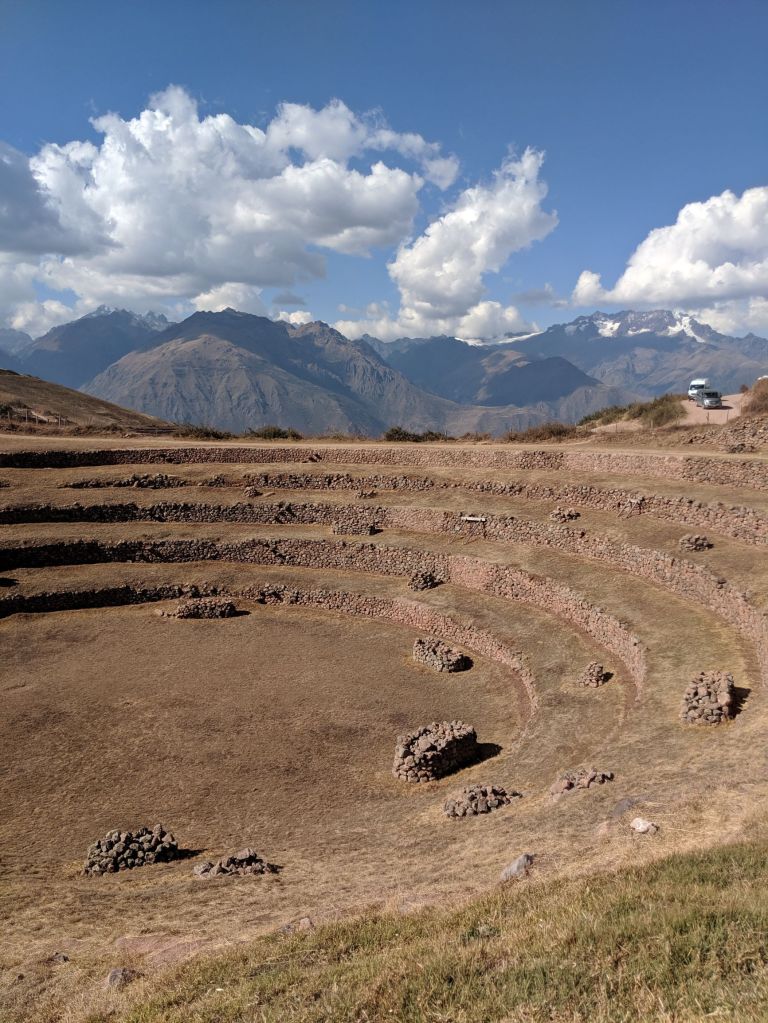
Moray Lab 3
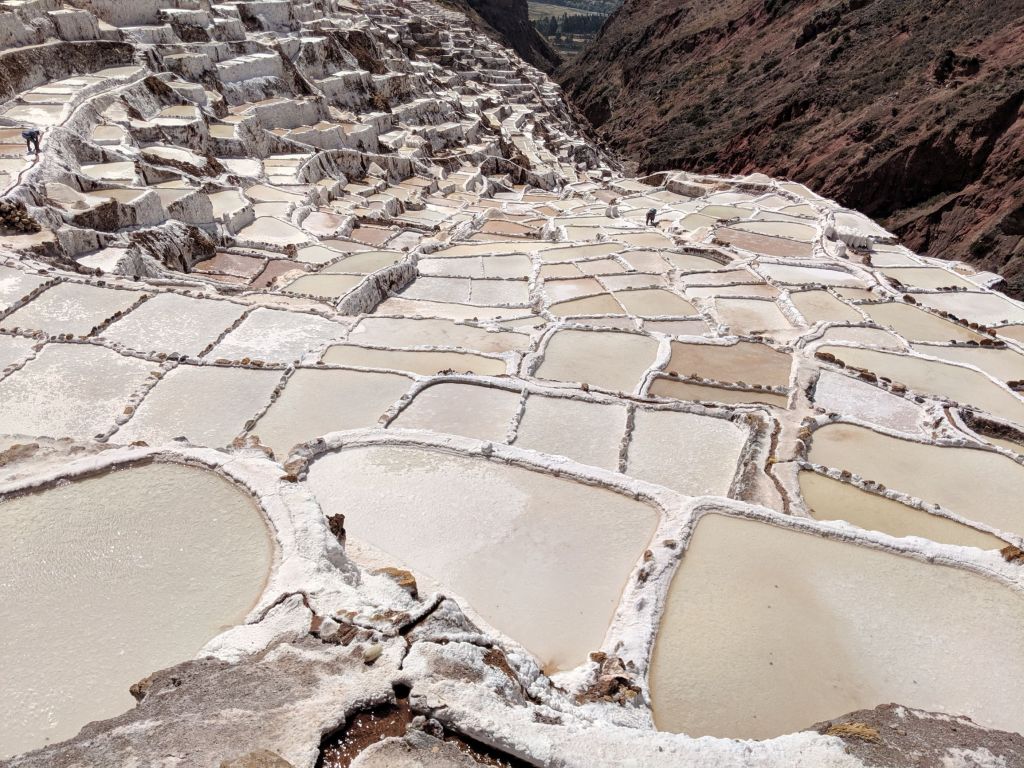
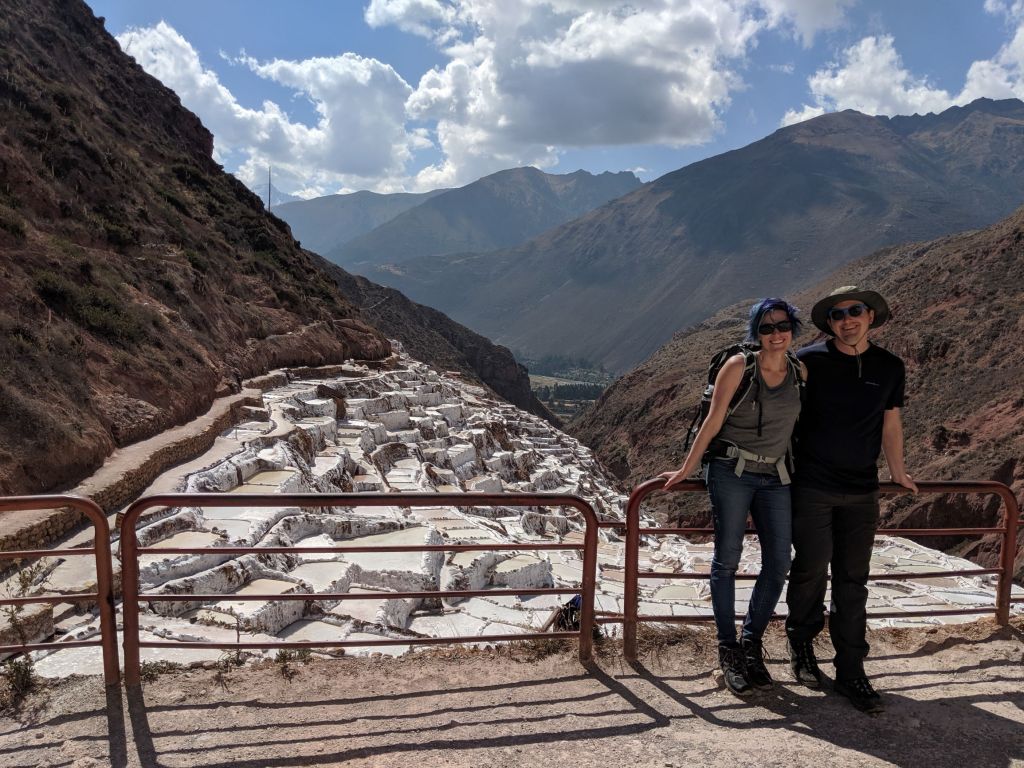
Near Moray is another fascinating site that’s been operation since pre-Inca times: the Maras Salt Mines.
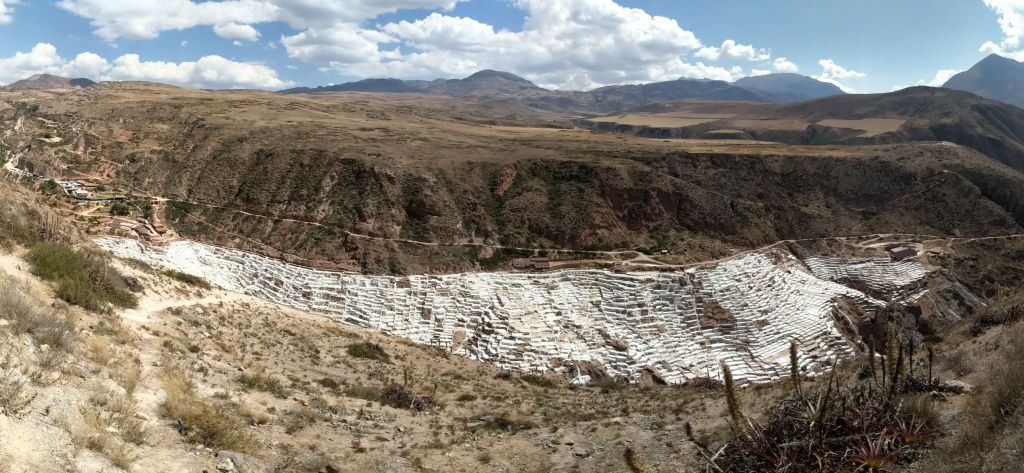
The entire complex of over 5000 evaporation ponds is fed by a single saline spring that emerges from the hillside in the far left of the image above. In the photo below on the left, you can just make out the spring trickling into the top of the ponds at the bottom of the image. It’s an amazing sight!
Our last stop in the valley was Ollantaytambo, which literally means “resting place of Ollantay”. Our guide told us a complicated story of the warrior Ollantay and his lover, an Inca princess – after they had overcome her family’s reluctance, they were able to at last build this place and live out their lives together in peace. The site is also known historically as the location of one of the few true defeats the Inca ever dealt the Spanish.
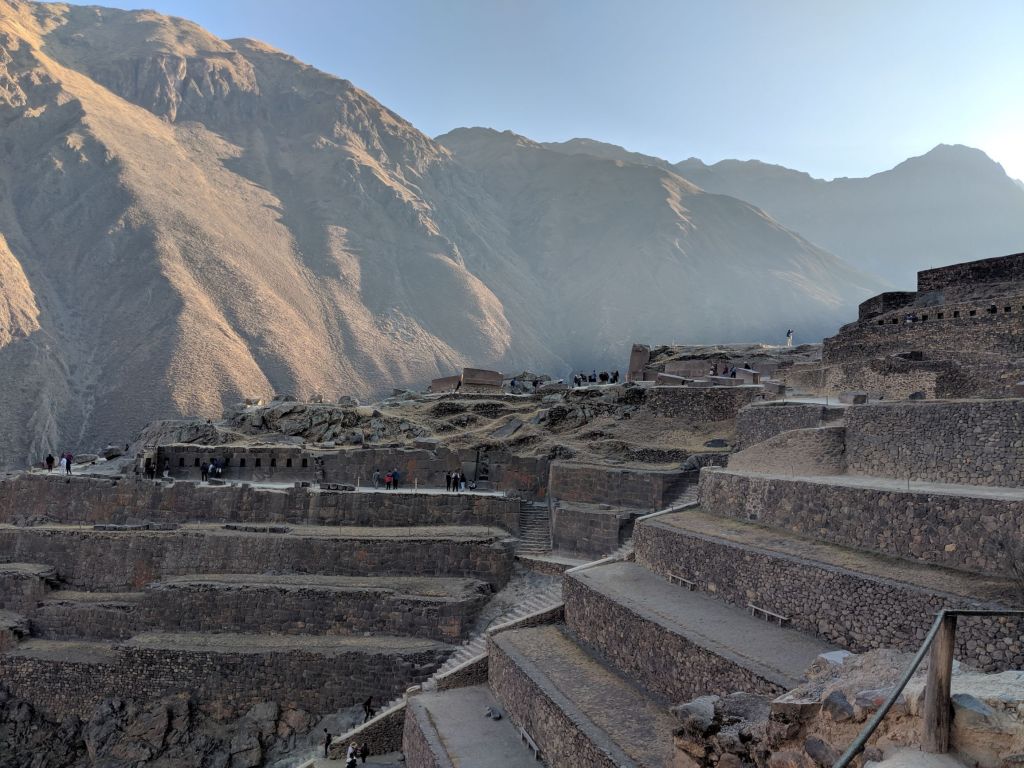
Located strategically at a pinch point in the Sacred Valley, Ollantaytambo commands a defensive position above the valley bottom, which at this point narrows dramatically. Apparently the Inca were able to defeat the Spanish here by flooding the plains below the town via prepared irrigation and water channels, thus bogging down the Spanish cavalry.
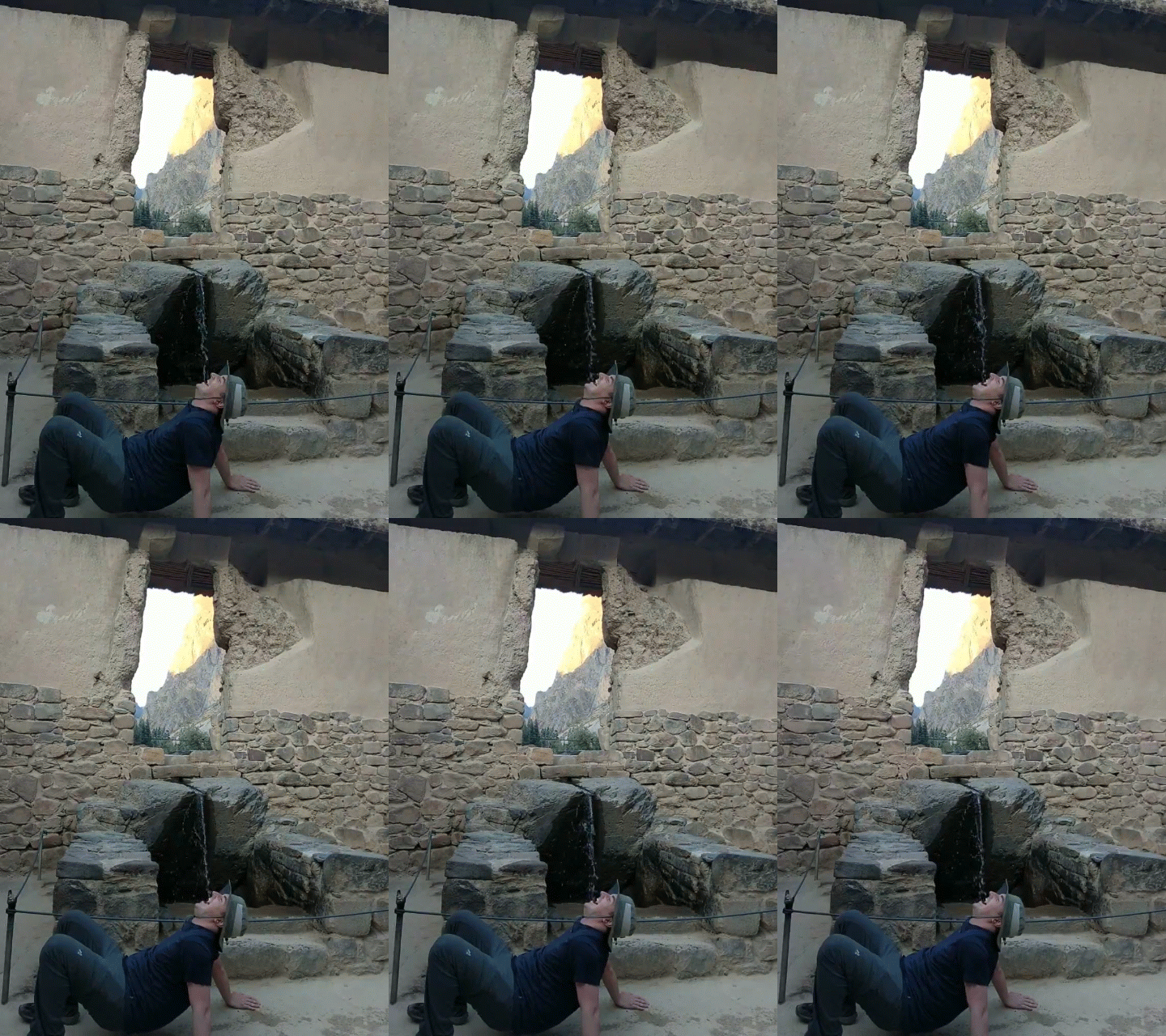
Some of the Incan fountains and channels are still flowing!
The complex is crowned by an beautiful temple structure with exquisite stonework, though it’s mostly lying in ruins because the Spanish did, eventually, manage to conquer Ollantaytambo.
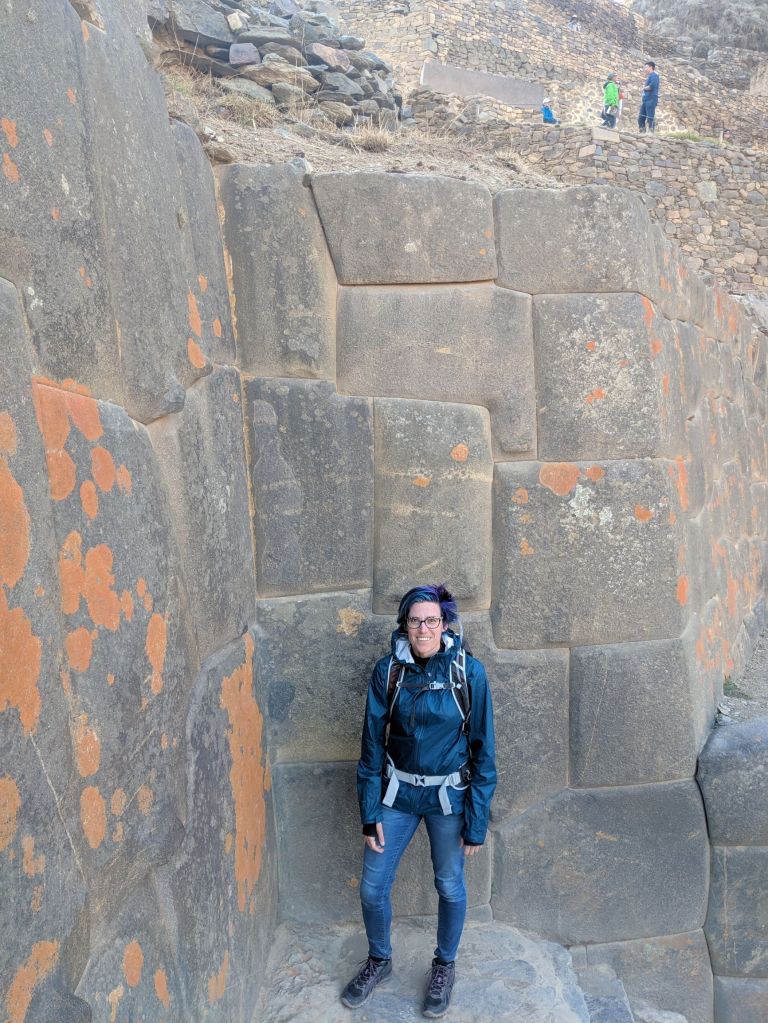
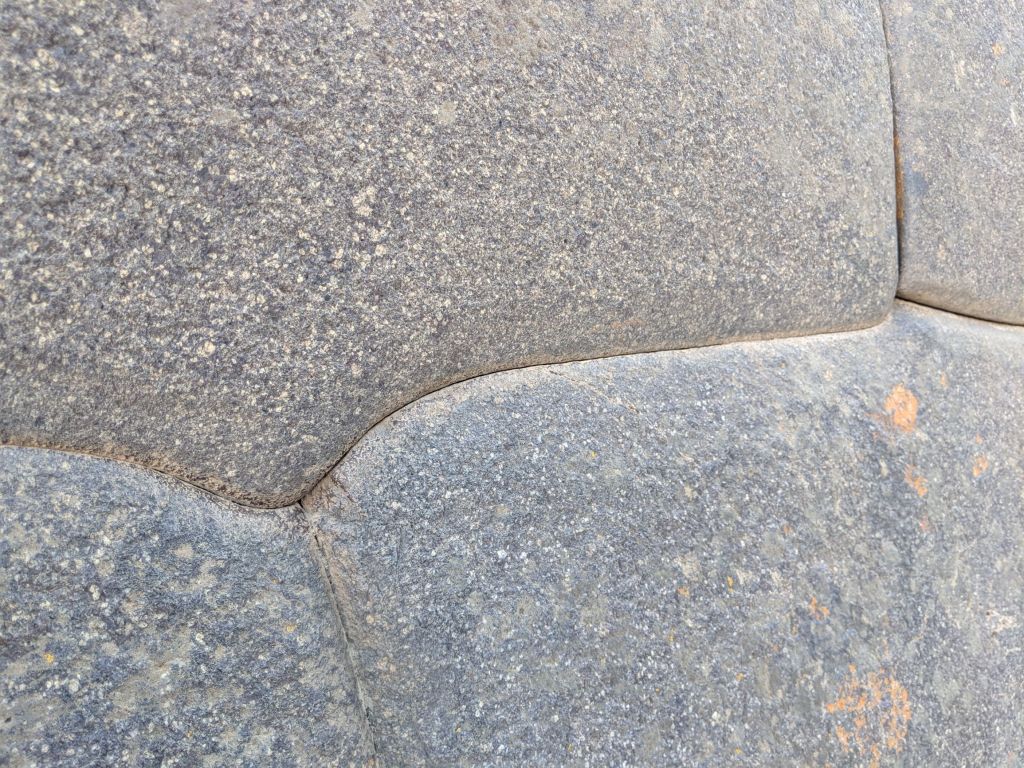
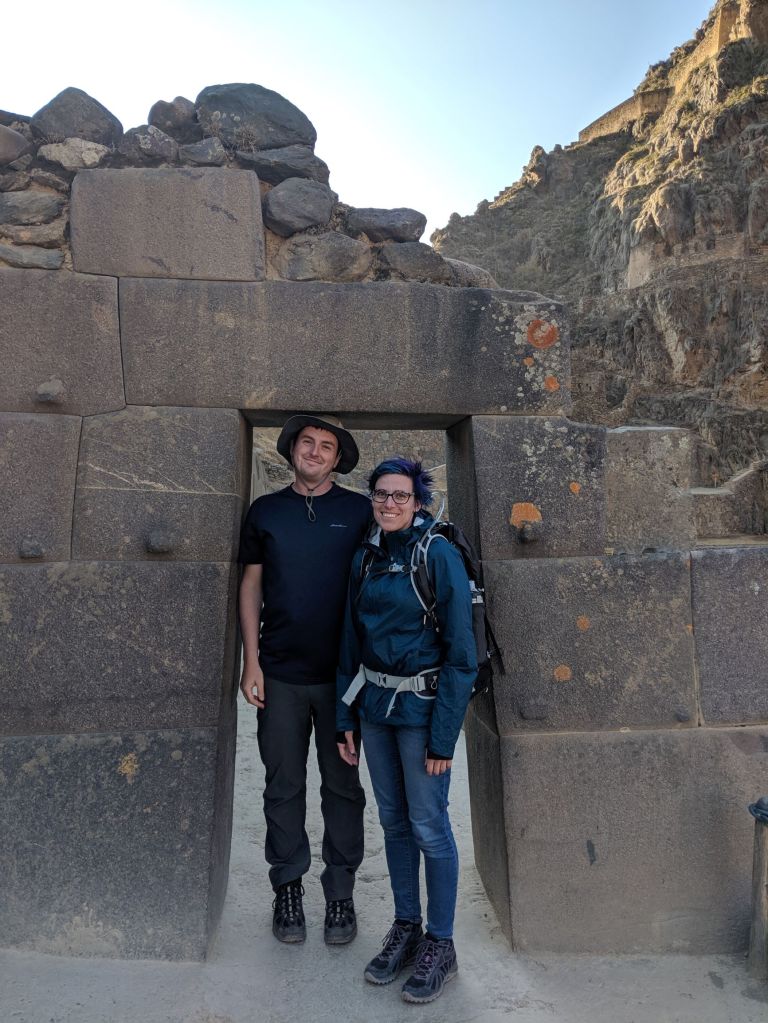
The Inca reserved their absolute best stonework for temples and religious structures. Palaces, terraces, and urban areas all feature impressive building, but without the eye-watering precision exhibited on the religious buildings.
That’s all for now! More to come on Cusco and the Sacred Valley in part 2.
 Honeymoon? Sweet!
Fascinating!!! Thanks for taking the time to share. Love to you both.
LikeLike