Oof – keeping this up to date is proving a challenge. In real time, we’ve just arrived in Chile after an amazing jaunt through Bolivia. In blog-time, we’re still in Cusco and haven’t even made it onto the Inca Trail yet. Bear with us.
In addition to the Sacred Valley sites I talked about in Part 1, Cusco itself is also full of archaeological gems, mostly associated with the Inca, defence, and religious ceremonies.
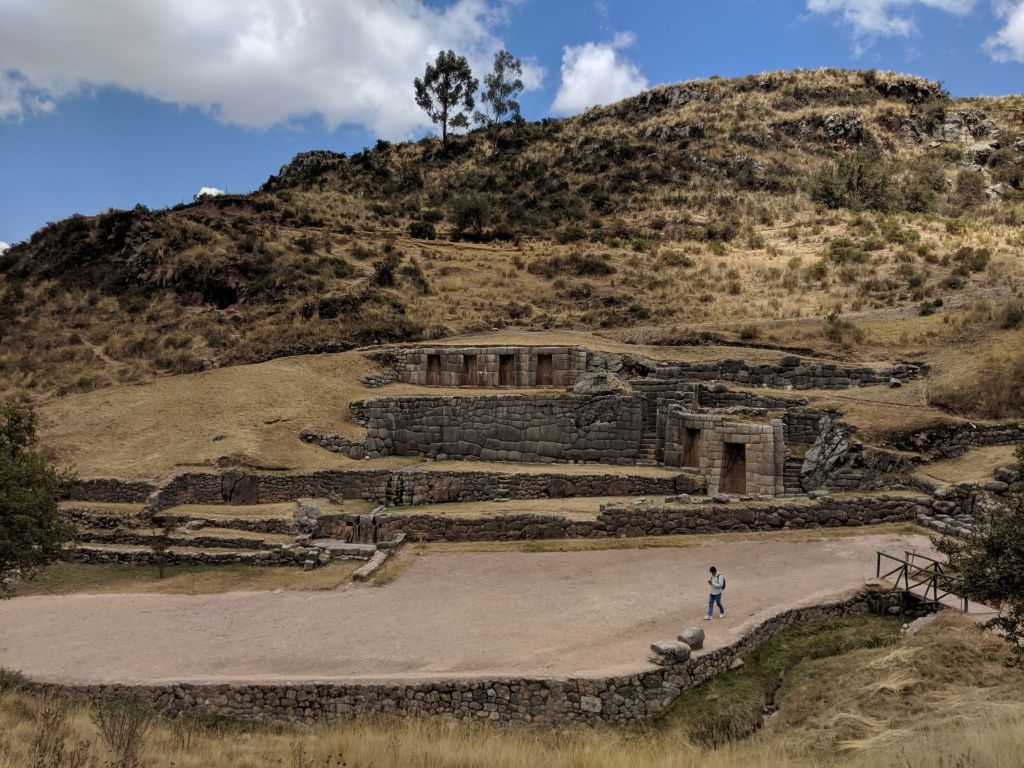
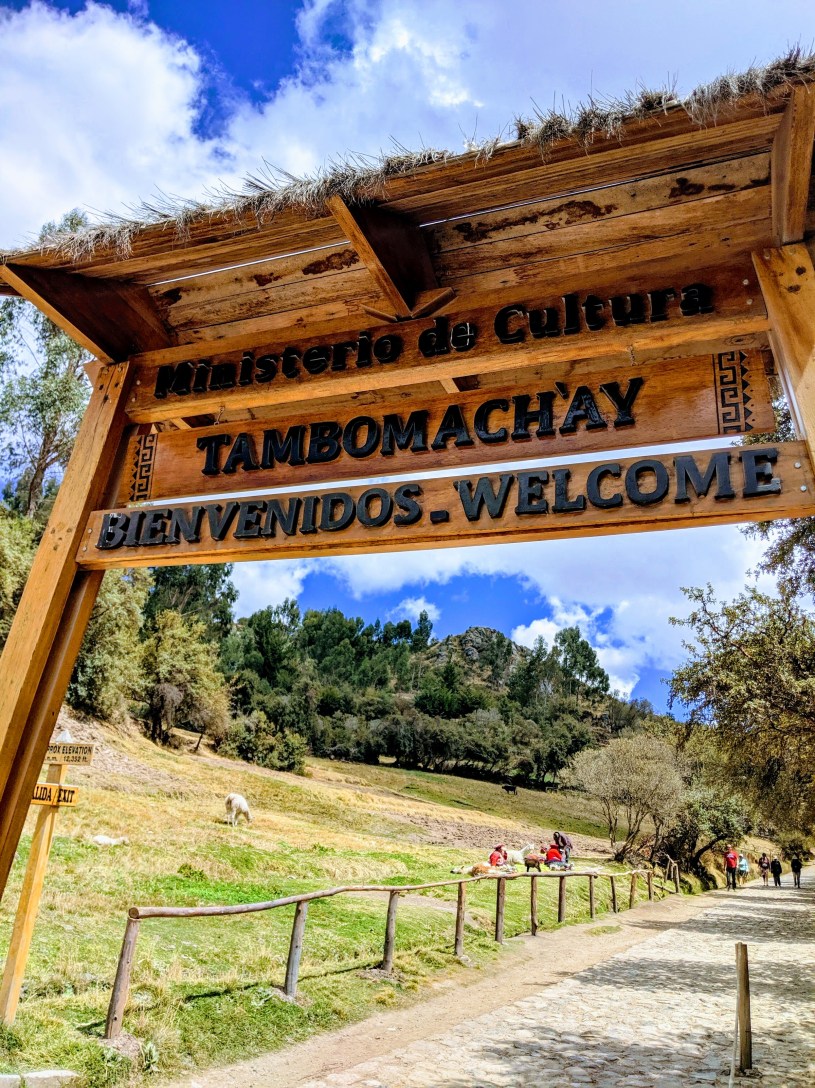
The site pictured above is called Tambomachay (literally ‘resting place of Machay’). It’s not far outside Cusco, nestled in a small valley beside a gurgling brook. The niches in the walls were for preserving the mummified remains of Inca rulers. The cool, dry, windy climate here (several hundred metres above Cusco itself) helped preserve the mummies.
During Inca times, the niches would have been covered by woven fabrics that would have kept the sun off, but allowed the wind in to preserve the mummies. During the solstice festival, the mummified former rulers would have been taken down from the niches and paraded through Cusco. The Spanish felt this practice was Not Okay, so the practice stopped about a generation after their arrival, only to be replaced by religious processions of various virgins and saints from the churches that were rapidly being built across the former Incan empire.
There’s a clever three-spout fountain toward the bottom left of the ruin. The fountains would have provided water for visitors to clean their feet and hands in before visiting the mummies. The water channel also runs past the foot of the niches, which would have helped keep the mummies cool as the wind blew across it.
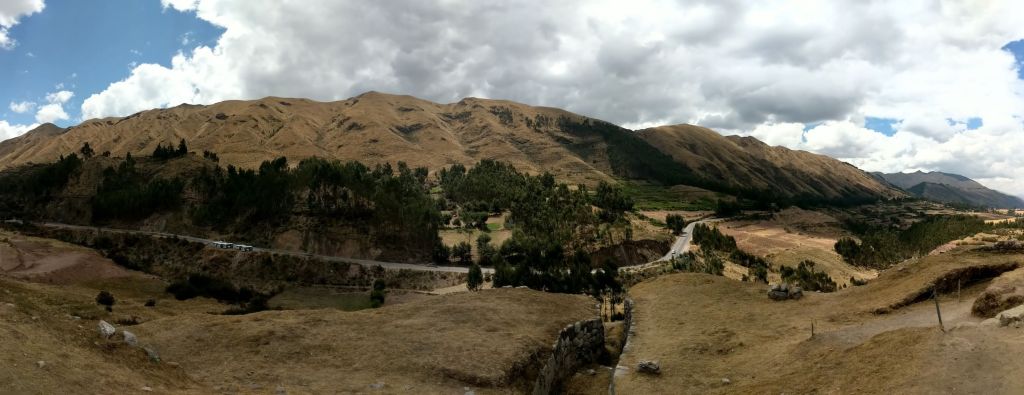
Another key site not far from Tambomachay was Pukapukara, which means ‘red fort’ – so called because of the reddish colour of the stones it’s built from. Pukapukara is located at the junction of several Incan routes leading into Cusco, and was an important defensive site for the City. Today, it commands a view of the road to the Sacred Valley on one side (photo above – part of the road is built on an old Inca trail) and a route into the heart of Cusco on the other.
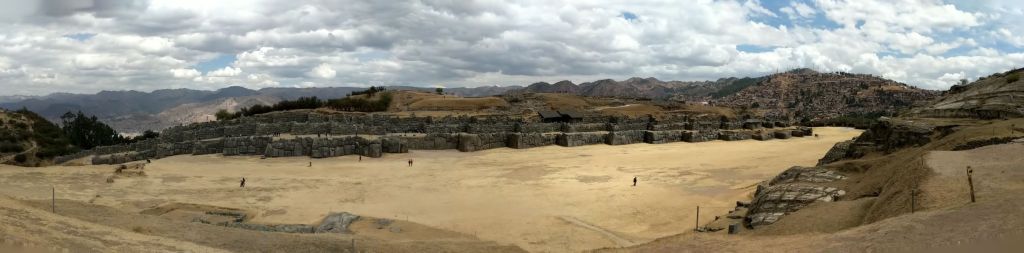
Likely the most important of the major sites around Cusco is Sacsaywayman (pictured above, and yes, it is pronounced more or less like “sexy woman”), which was a religious and celebratory location for the citizens of Cusco.
Cusco was the capital of the Incan empire, and the rulers of the four provinces were expected to maintain residences there. Sacsaywayman included temples, large open areas for celebrations and gatherings, and a tunnel complex that likely had a religious purpose linked to the ever-present Pachamama (Mother Earth), one of the most important Andean deities who retains her relevance today.
The photo above is of one of two large plazas at Sacsaywayman. Historians and archaeologists believe the plaza was used for (among other things) professional competitions between guild members. Each year, the members of each profession (stonemasonry, architecture, weaving, etc.) would come to the plaza to demonstrate their expertise. Performances would be judged, and the winner would be crowned the leader of the guild for the next year. Those wishing to join the profession could also come to attempt to win entry.
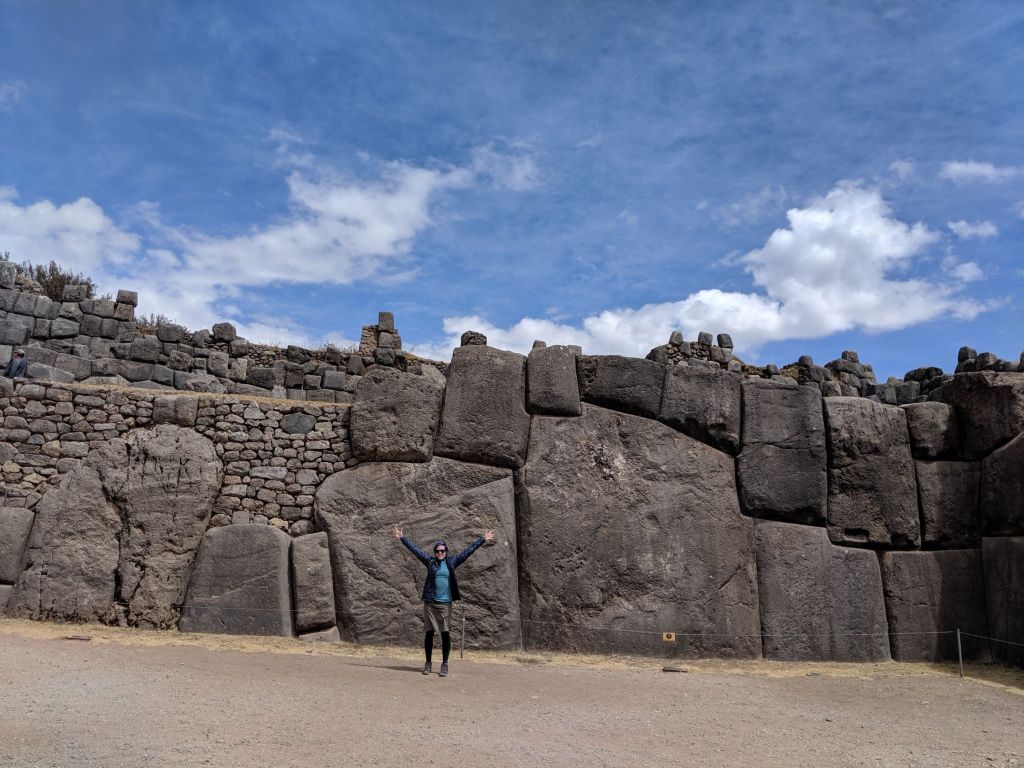
The scale of the stonework at Sacsaywayman is staggering (I’m really into the rocks). Some of the newer finds at the site include the foundations of three stone towers that were likely over 20m high!
The Incan city of Cusco was laid out in the shape of a puma – one of the three primary sacred animals of the Inca, the other two being the condor and the snake (surprise – the Spanish also weren’t super into the fact that the Inca worshiped snakes). Sacsaywayman was the puma’s head, and the tower located at the puma’s eye was round.
Down in the city, the site known as Qorikancha was located at the puma’s heart.
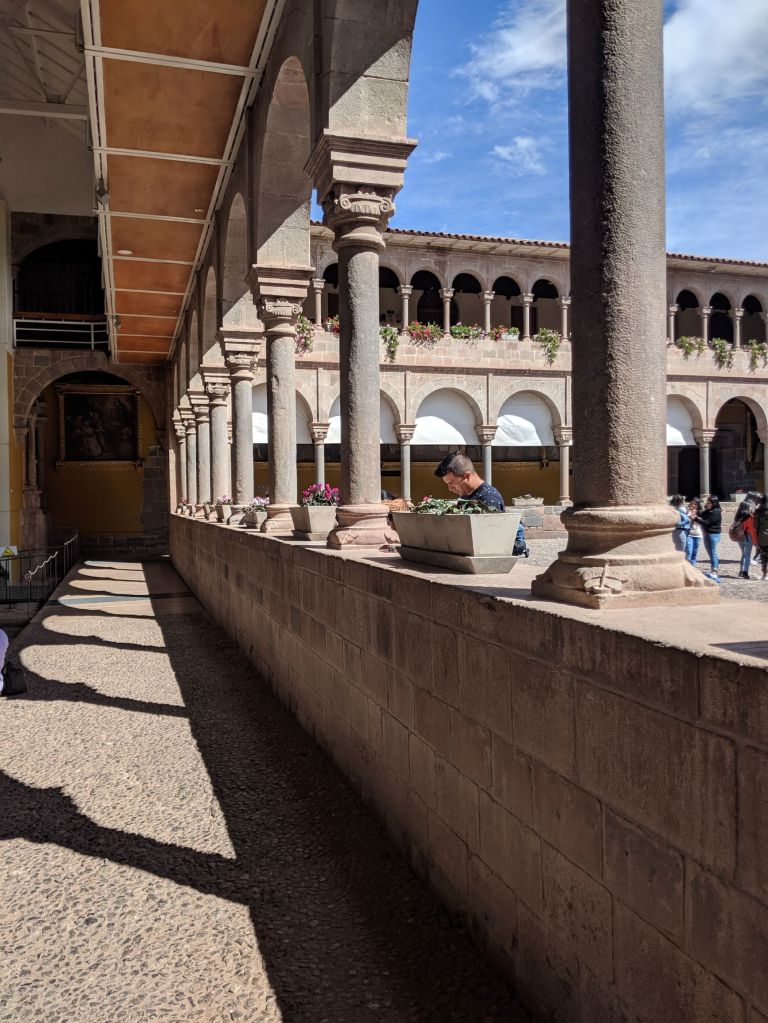
Qorikancha is interesting, as it was likely the most important religious site in Cusco, and because of this it was particularly targeted for destruction by the Spanish. The Spanish razed most of the site, and built a church on top of it, using the Incan masonry as foundations. The pebble floor in the image above is original, though. A major earthquake in 1950 leveled much of the Colonial-era Cusco, revealing the Incan Qorikancha foundations again, and today parts of the site have been restored. It’s an interesting mashup of Incan precision, Spanish Catholicism, and modern restoration.
I was mostly in it for the stonework details, though.
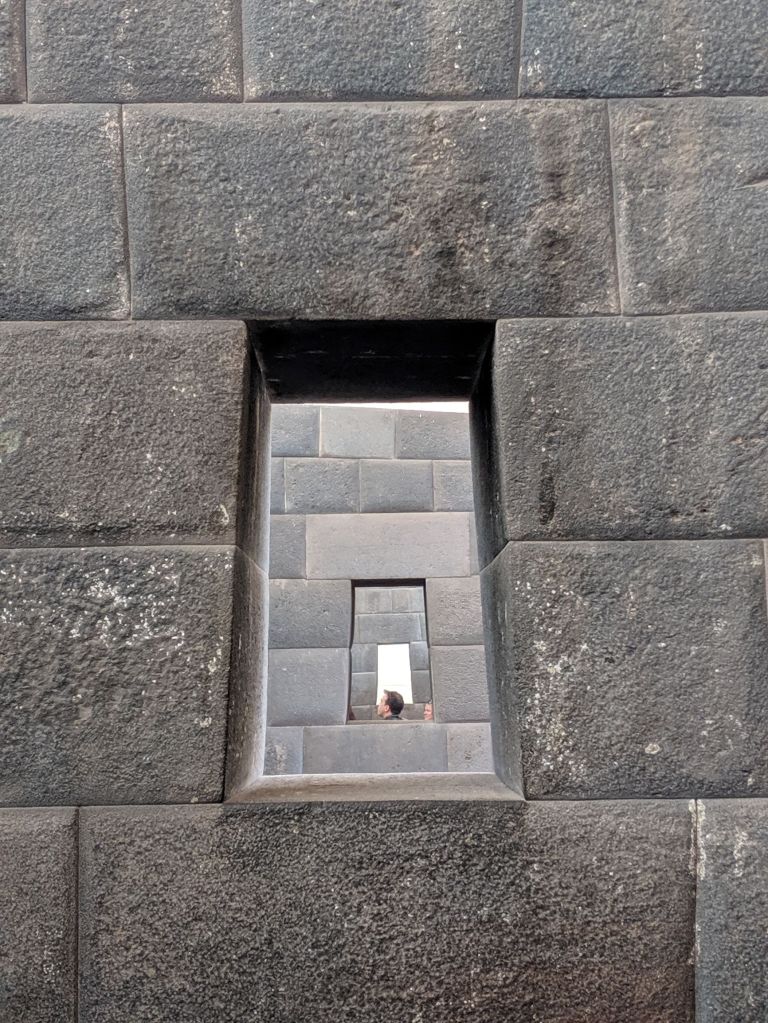
Perfectly aligned windows 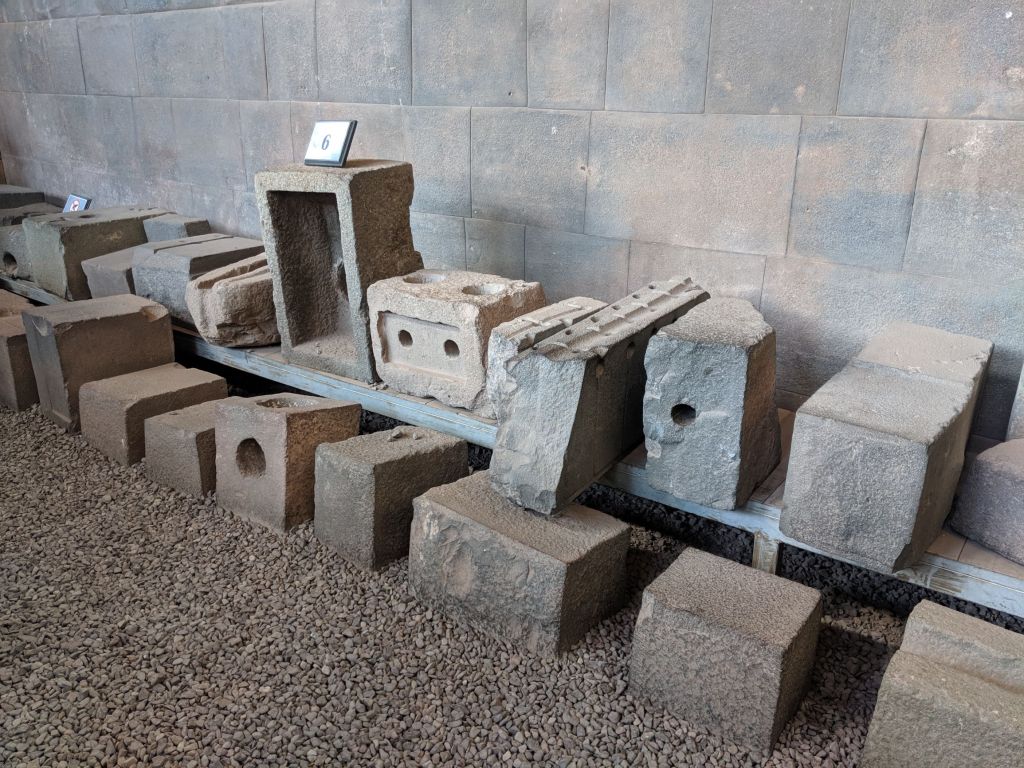
Incan stone joinery 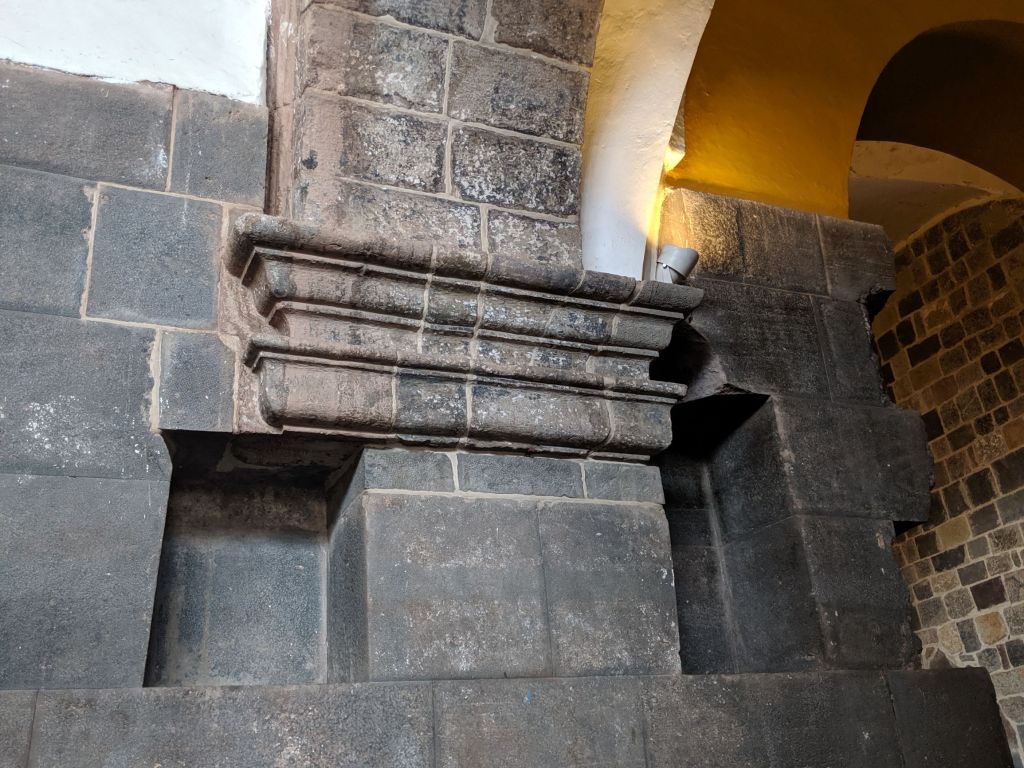
“I guess we’ll put the arch here, then?” – The Spanish
That said – the gallery of religious art associated with the site (no photos allowed) had a sculpture of the pregnant virgin Mary. I’d never seen a depiction of Mary pregnant in religious art before, so this one was striking. The guide explained that picturing Mary pregnant was considered vulgar and inappropriate to European sensibilities, but that in South America, particularly in the Pachamama-worshipping Incan empire, the image was seen as a way of bridging between the traditional belief systems and Catholicism.
We also took a great (but long) walking tour of Cusco with Incan Milky Way tours.
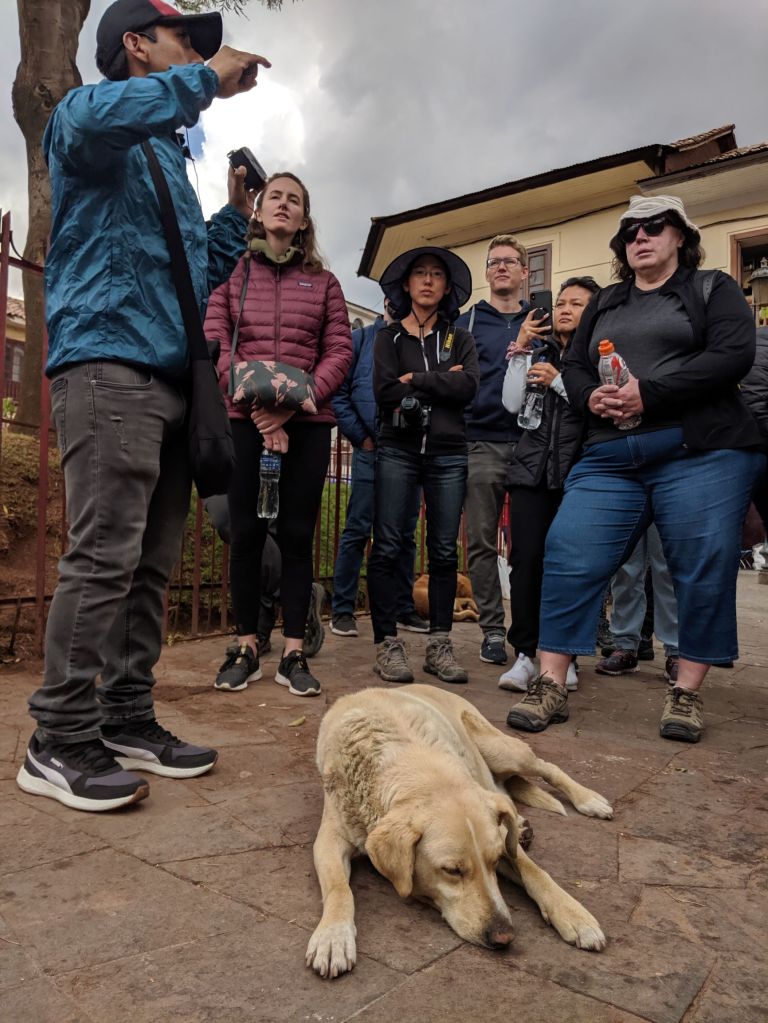
We were accompanied on our walking tour by Chester the walking tour dog who has been following tours for 8 years apparently! He picked us up in the square, and kept all other street dogs and wayward pedestrians at bay until we reached the central market, where he promptly abandoned us for the vendors who fed him scraps.
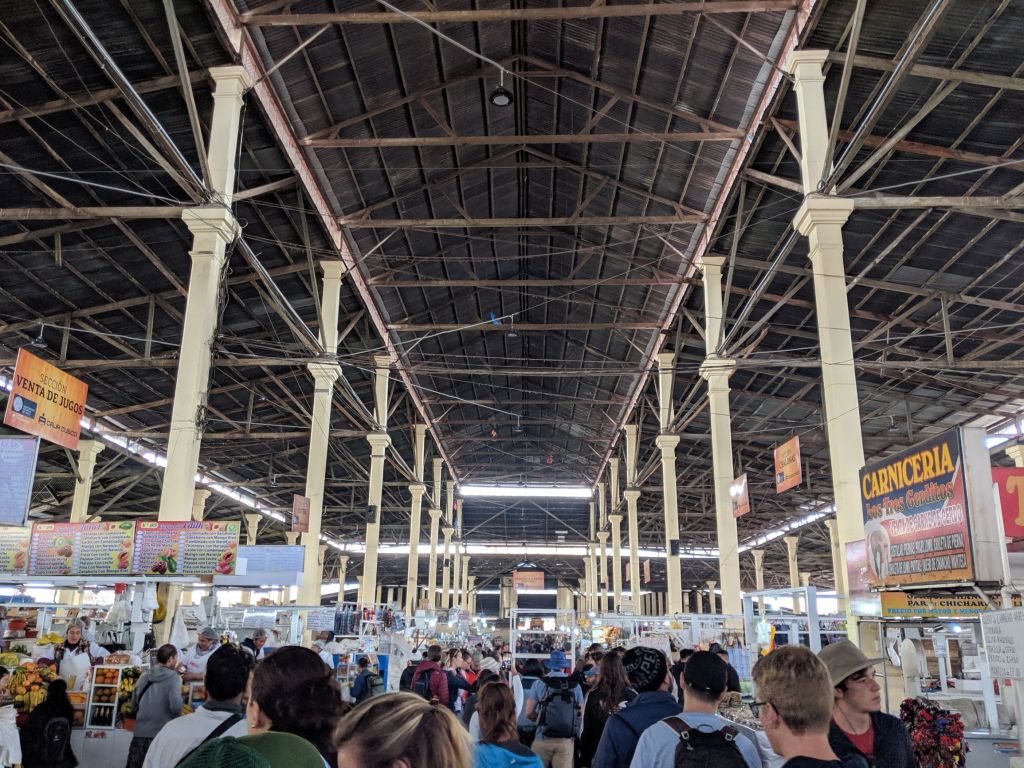
The central market was designed by Gustav Eiffel (guy got around – we also saw one of his works in a park in Sucre, Bolivia!) and featured all of the usual market suspects, as well as mummified baby llamas (top left in the second image below).
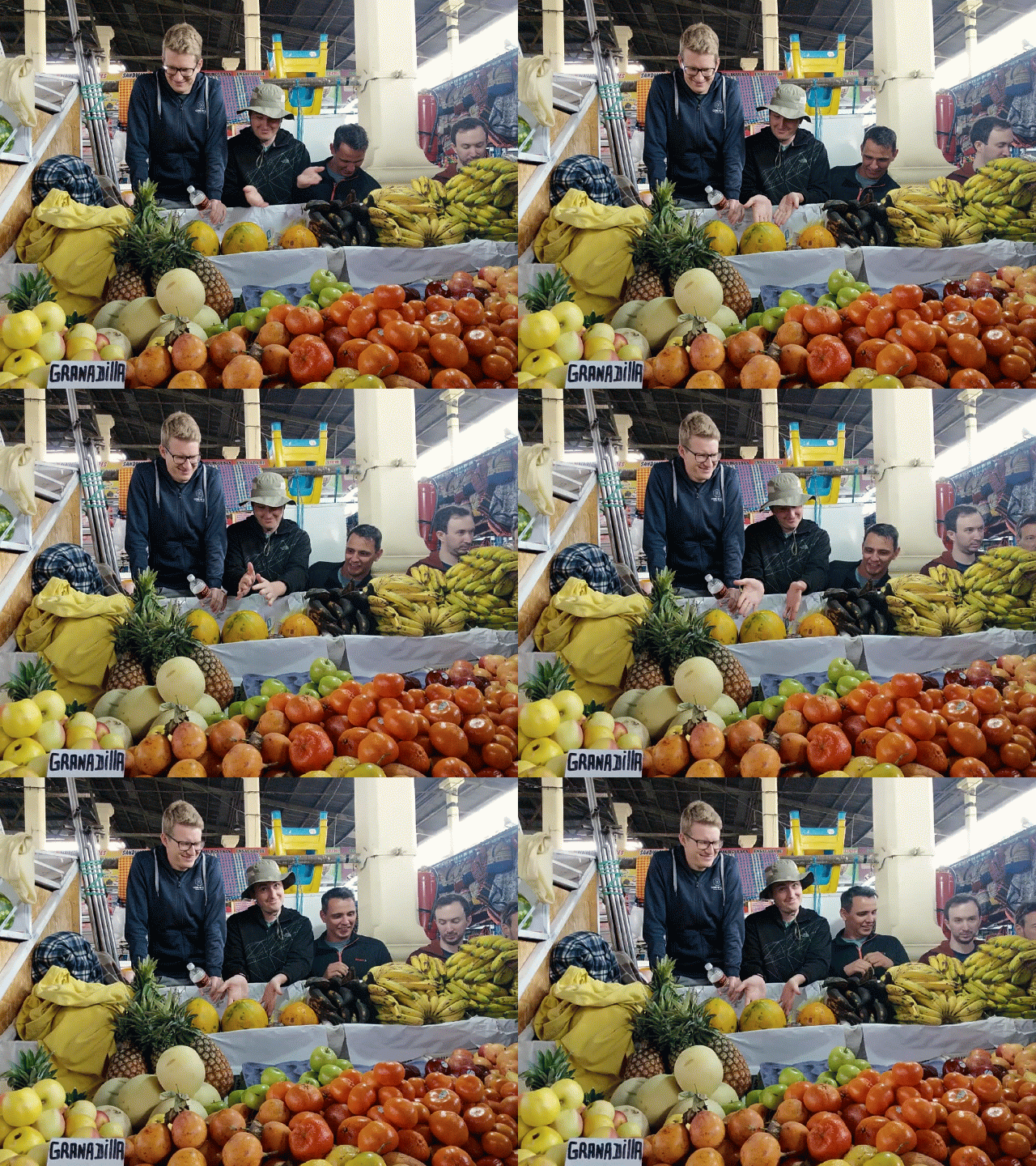
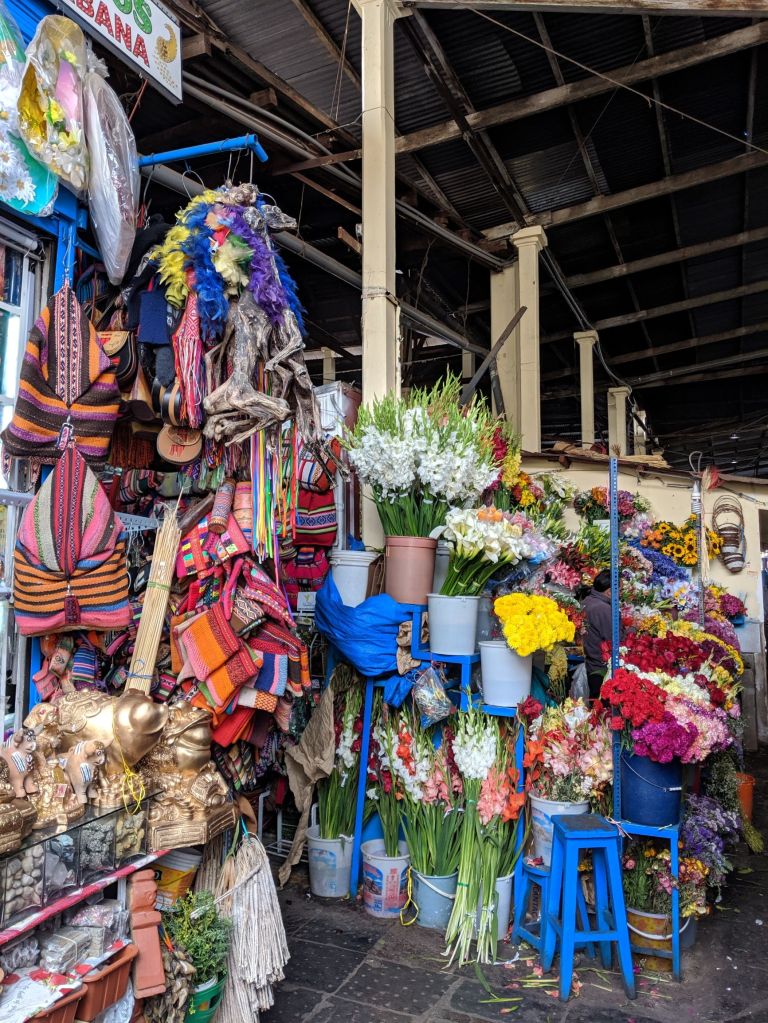
The baby llamas are offerings that people bury under the foundations of new houses and buildings to thank pachamama for letting them use the land.
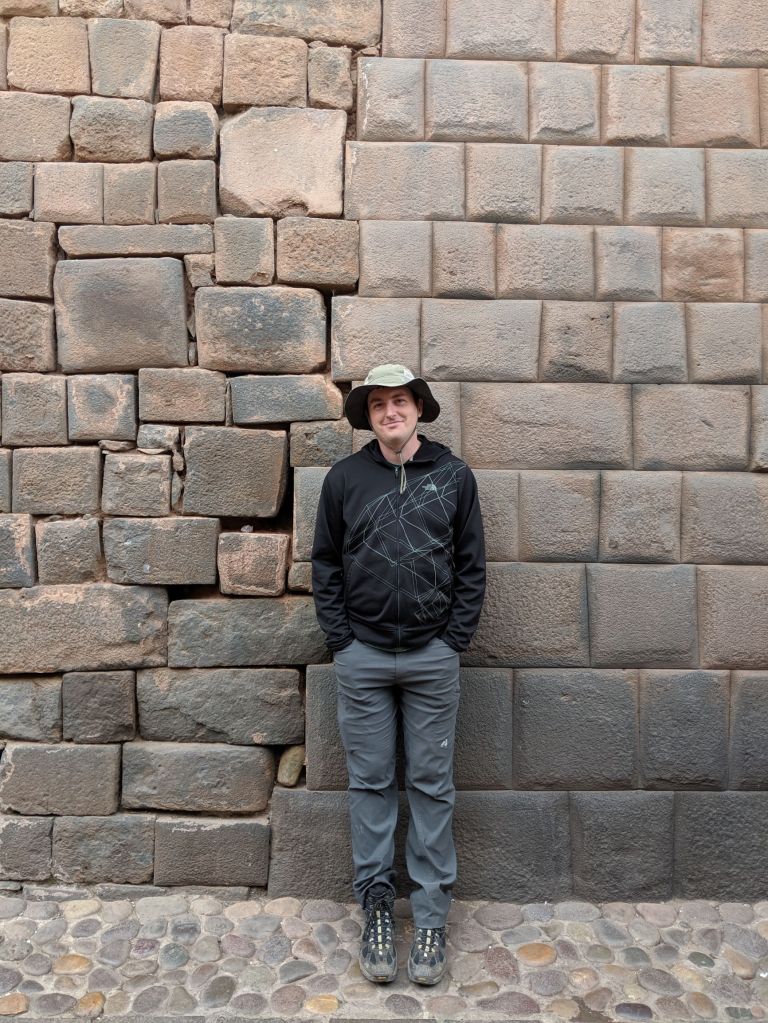
Along the way, we saw lots of other examples of Inca and inca-pable stonework of various eras. In the image below, you can see the Incan work on the right, and the poor imitation Spanish effort on the left. Bryn is helpfully marking the division!
Next, we took a walk around Pachacutec’s palace. Pachacutec was the Inca who built Machu Picchu and expanded the empire. In an interesting bit of history, we know for sure that this was Pachacutec’s place because even though the Spanish arrived in Cusco in 1533, it took a few generations for colonialism to really take hold. It wasn’t until 1572 that the last Inca stronghold of Vilcabamba was defeated. In those in-between years, a generation of children whose parents were Inca and Spanish grew up in the remains of Incan Cusco. One of the first written histories of Incan life and Cusco was written by Garcilaso de la Vega, the son of an Incan noblewoman and a Spanish captain and was published in 1609.
Garcilaso de la Vega was born in Cusco in 1539, and lived there until he was 21. During those years, he learned first-hand about Incan life from his mother and her family, likely including visiting the Incan palaces that would have been still standing in the early years of Spanish conquest. There’s not much left of these palaces today, but the 1950 earthquake helped out again by shrugging off the accretions of centuries and exposing the Incan foundations in many parts of the city.
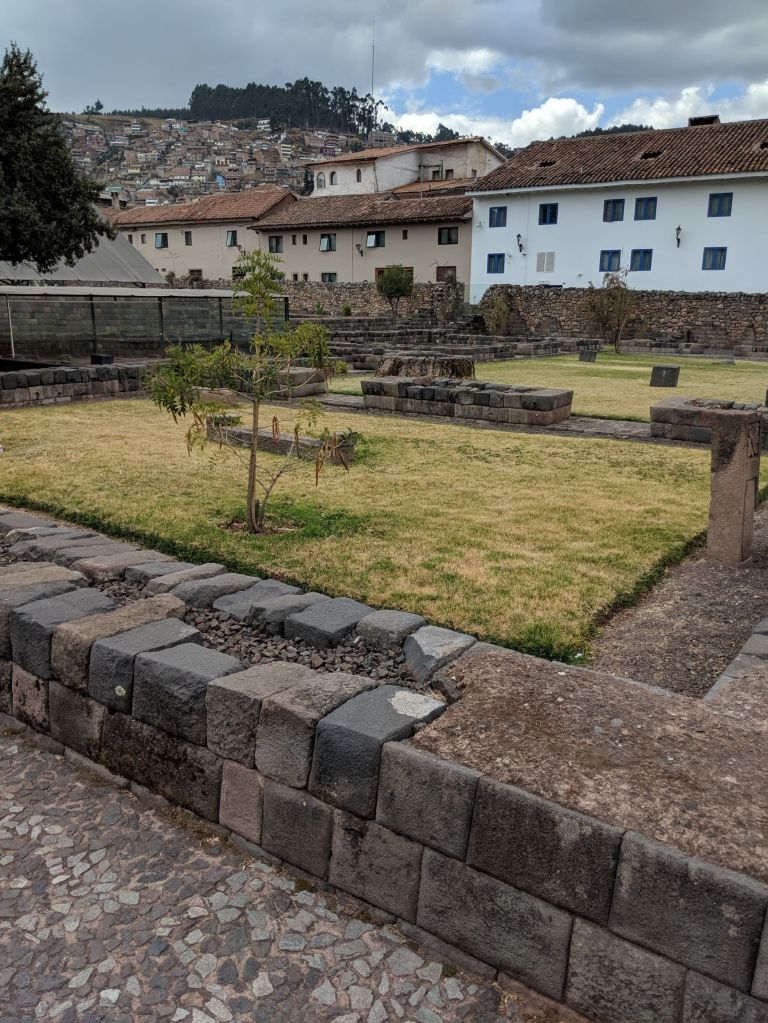
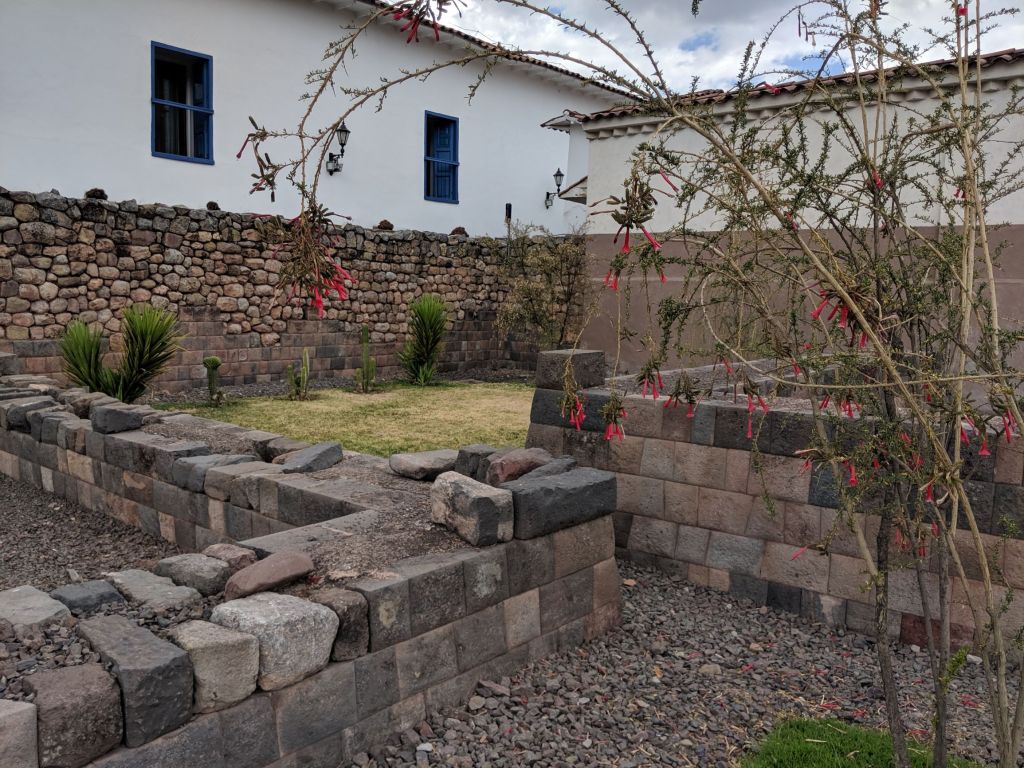
Pachacutec’s palace belongs to the Ministry of Culture today, and you can visit the grounds for free. It occupies most of a city block, and is laid out in the shape of a tic-tac-toe board, with nine large courtyards ringed with living, eating, and entertaining spaces. The remaining Incan walls are only about a metre high in most places, but you can get a feel for the scale of the house. There were 14 Inca from the early 1400s to 1572 – and each Inca would have had a comparable palace in Cusco’s city centre.
We also saw some examples of colonial-era architecture. The Plaza De Armas was the main hub for most things, though it was occupied by a literature festival for most of our time in the City. We got a few glimpses of the religious and civic architecture that ringed the square, as well as a peek into the courtyard of a colonial hacienda. Every neighbourhood has a main square as its focal point, and the pleasant San Blas neighbourhood where we spent our second jaunt in Cusco also had a delightful square.
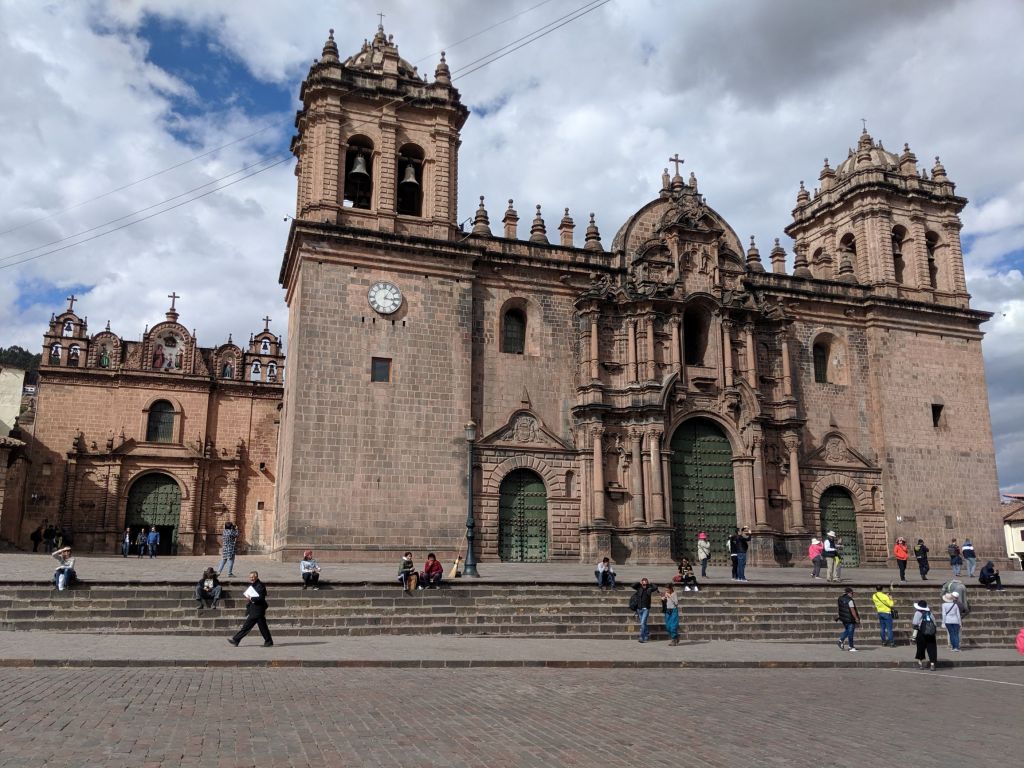
Plaza de Armas 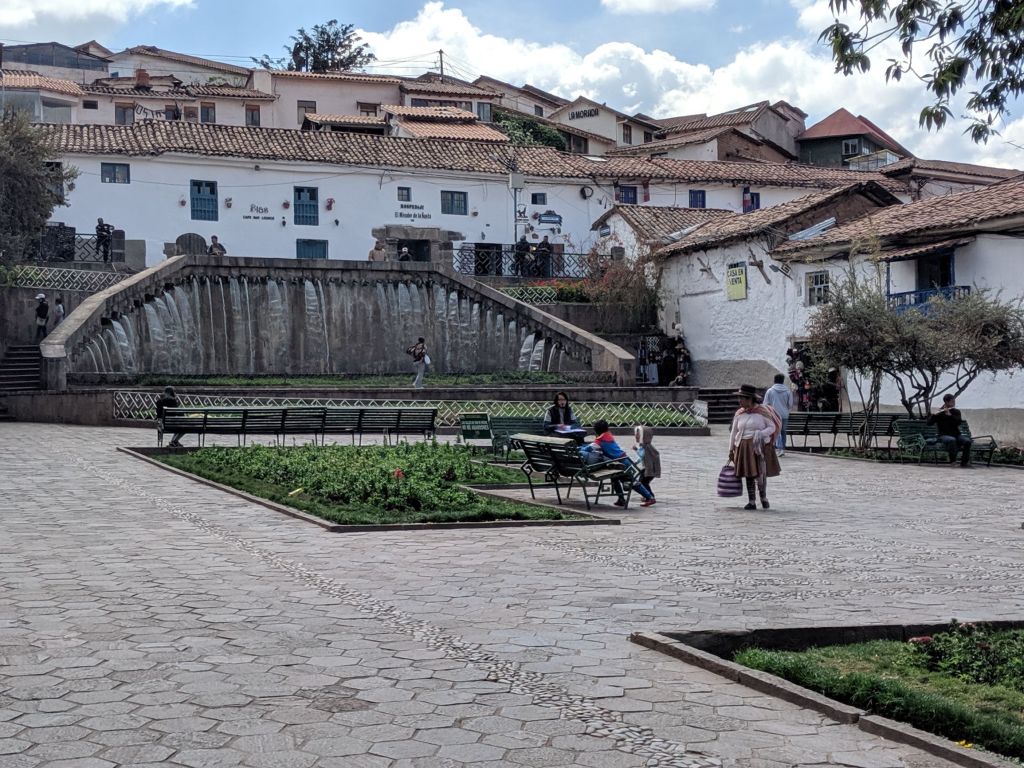
Plaza San Blas
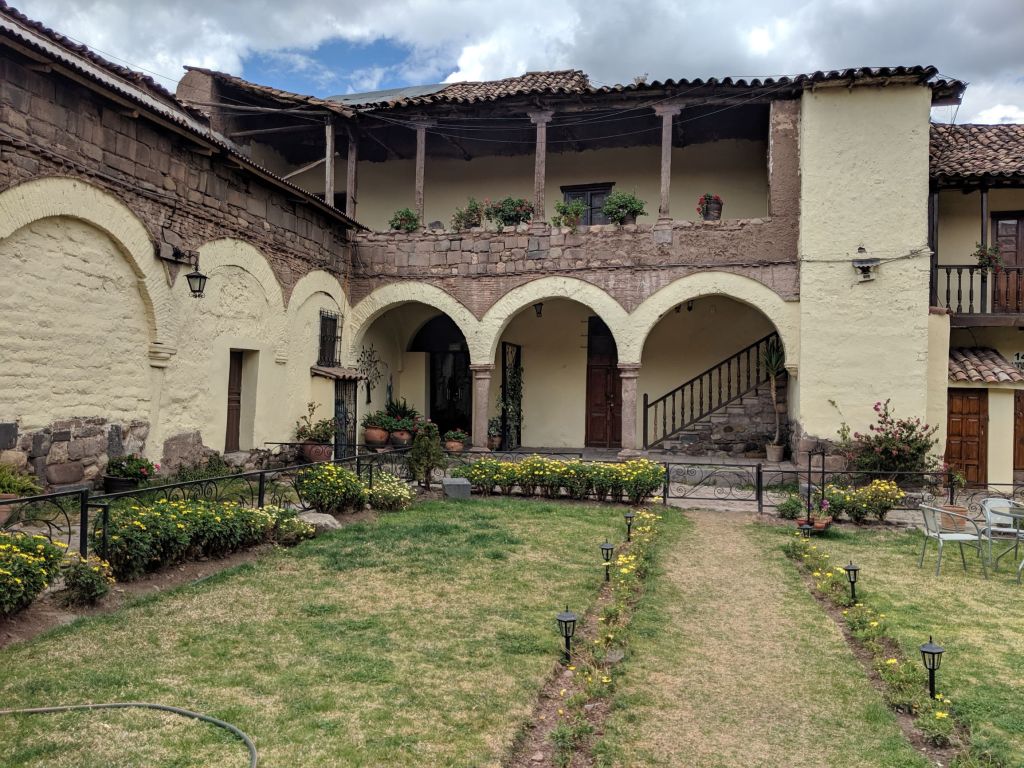
Colonial pile 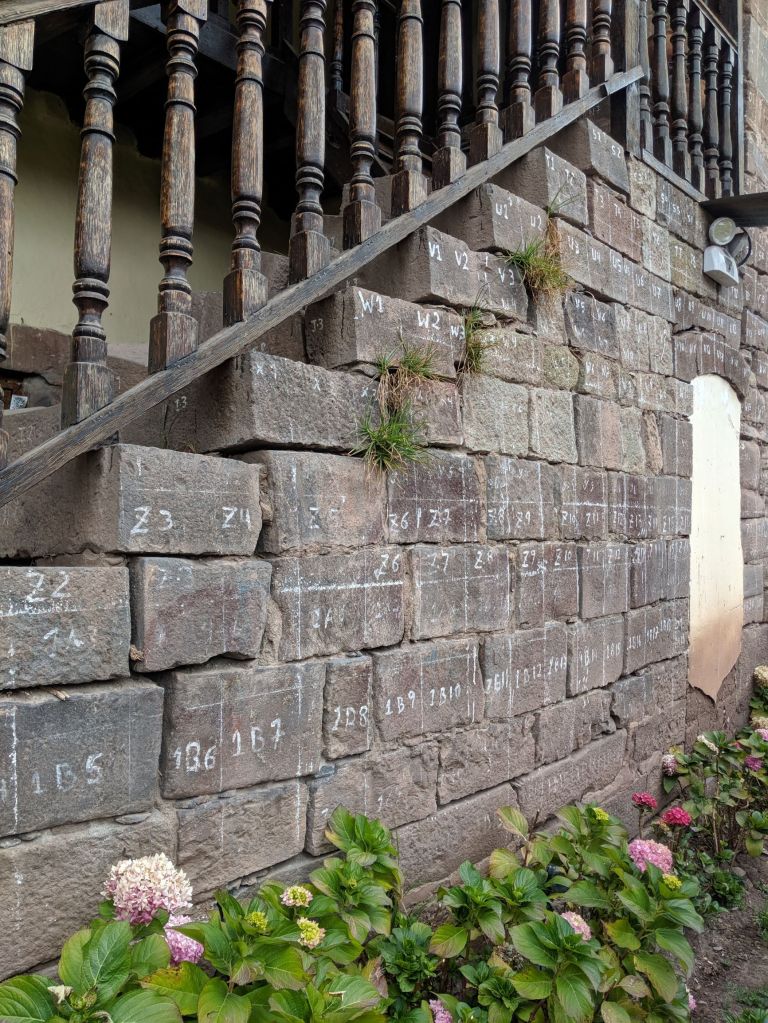
Restoration is serious business.
Central Cusco (like many of the sites we’re visiting this trip) is a UNESCO World Heritage site, which means that restoration projects are taken very very seriously. The stairwell on the left is from the Colonial villa we visited, and the stones on the side of the collapsing staircase have been marked and numbered because the owners want to restore the staircase – but must do so with the original materials to comply with UNESCO’s rules.
 Honeymoon? Sweet!