If our tour guides and hotel hosts are to be believed, the Galapagos Islands may one of the most regulated places on earth.
One of our guides mentioned that a lot of this stems from UNESCO threatening to take away its status over inaction towards shark finning, drug smuggling, and other illegal fishing activity in the early 2000s. While we totally agree with and support the Ecuadorian government taking such a strong stance to protect the Galapagos, the amount of regulation and government action really was striking.
For example, as we first arrived in Galapagos we saw a half dozen boats in various stages of dereliction including a massive fishing trawler and a fancy yacht, all of which had been seized by the Ecuadorian government simply for sailing into the marine reserve. Anyone guilty of entering the protected waters without permission would have their boat seized and forfeited to Ecuador. The trawler was actually anchored just offshore, in the process of being refitted for use by the Ecuadorian Navy. We forgot to take a photo of the various seized boats stacked up along the harbour and side of the highway, but it was incredible to hear about the lengths the Ecuadorians were willing to go to to protect the Islands.
Another guide mentioned that both the Navy and Air Force had recently been deployed to defend the Galapagos, as there were something like 250 fishing vessels hovering within 1-2 miles of the marine reserve boundary. While the consensus from locals seemed to be these were primarily Chinese ships, it is worth noting that the 4 international boats seized on our second-last day there were all Peruvian, and full of shark (fins) – source here.
In addition to the crackdown on unauthorized vehicles in the water, we heard that the government also heavily regulates residents’ private and personal vehicles. Ground vehicle imports are heavily restricted, while fishing permits are limited to fishing families and can only be passed down within the family. Tour boats are monitored by satellite for gas usage (gas prices and sales are controlled by the government), and these boats are given specific timed entries for many of the major tourist sites, with a three strikes rule for those who fail to leave once their window is up. The first two strikes result in hefty fines, the third will cause you to lose your licence and ability to operated the boat. Similarly, if you take too long to repair your boat, you may lose your license to operate, which happened to our last guide. He’s still trying to figure out how to get permission to get the vessel back into the water and over to the island where he now lives.
Interestingly, we heard from several locals that they were in favour of even more regulation – things like increasing the national park fee from the current $100 per person and adding more controls for e-scooter licensing.
All that said, there do seem to be some positives. We were the only group at most of the sites we visited, as the timed-entry system severely restricts the number of people and boats in a given location on a given day. Not all the sites are available to visit every day, either, so the wildlife gets some respite.
There is also a strong conservation ethic on the islands. There is a ban on bringing in any fruit, nuts, seeds, soil, etc. from the mainland. They actually search your bags twice for these kinds of contraband before letting you on the Islands. Our checked bags were x-rayed and sealed in Quito airport, then subjected to a thorough sniffing by dogs at the Baltra (Santa Cruz) airport on the Islands before we were able to pick them up. Our carry-on baggage was hand-searched as we got off the plane. The crew of the aircraft also sprayed insecticide in all of the overhead bins before landing to fumigate any potential insect hitchhikers that made it over, and as we entered the airport, everyone walked through a disinfectant mat to clean their shoes. Very thorough.
There is also a complete single-use plastics ban on the Islands, and you are encouraged to ditch any plastics during the searches mentioned above. Other than small carry bags for eggs or other bulk goods, it was remarkable how little plastic we saw on the islands. Pop was sold in glass bottles, water primarily in large, refillable water-cooler sized jugs (though you could get smaller more portable bottles if you needed it).
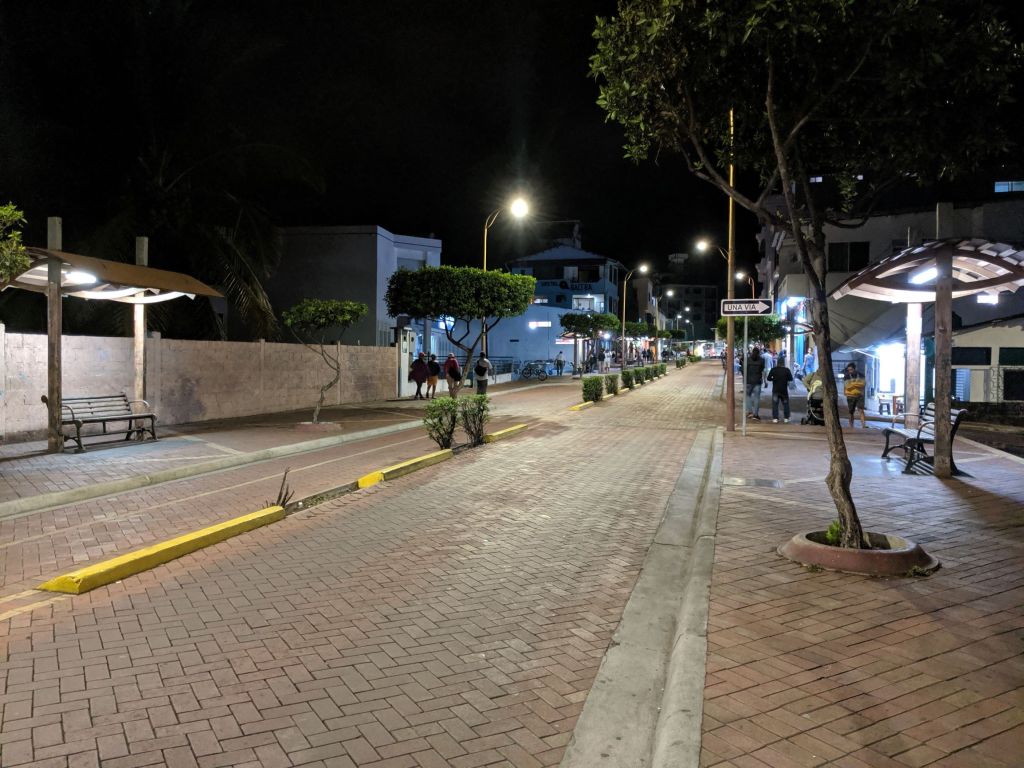
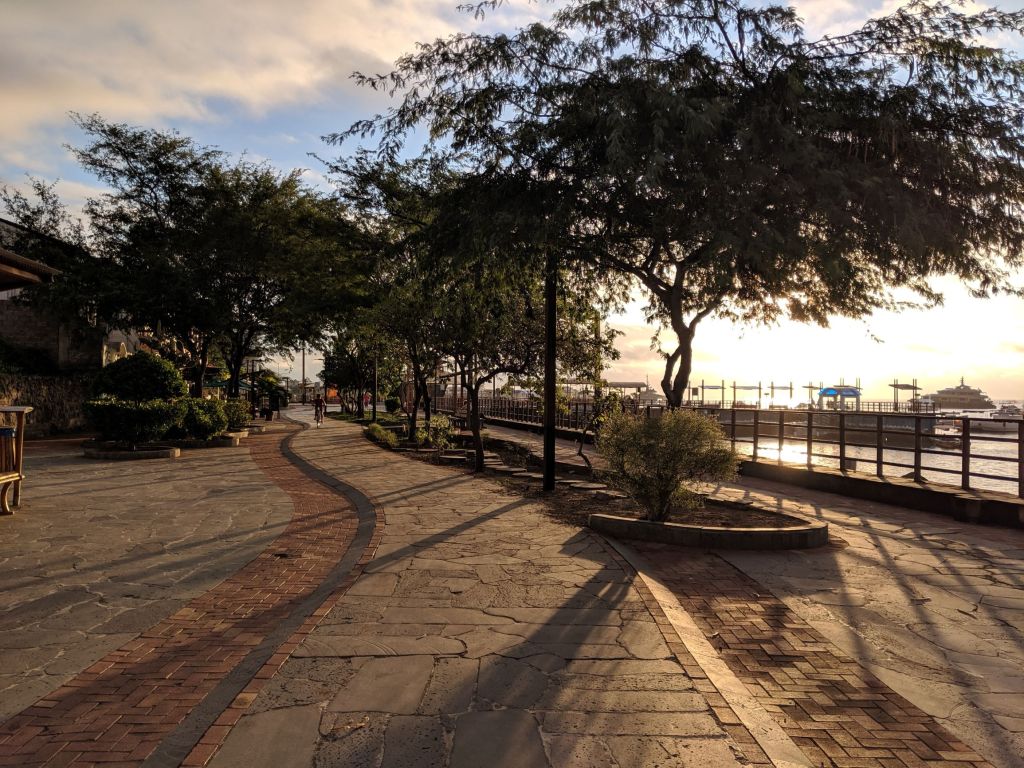
The Airport on Baltra is LEED Gold certified – an environmental certification for buildings (LEED = Leadership in Environment and Energy-efficient Design), and we were surprised to see segregated bike lanes throughout the Islands. Once we found out about the vehicle controls, though, this started to make a bit more sense. There were a fair number of electric vehicles around, as well as electric scooters, and lots of bicycles for those bike lanes! There were also a number of conspicuous solar installations across the islands, notably on Isla Isabela.
One last thing that we were never able to confirm, but one of our guides claimed that there were the hefty fines for (being caught) killing any of the wildlife. One local accidentally ran over a Pelican, which meant he was facing a $15,000 fine… luckily he received leniency because he attempted to save it at a local vet, and so was only fined $6000 instead (!!).
So, yeah. When possible, try to keep the mandated 2 metre separation between you and the wildlife. It doesn’t seem worth the risk if something goes wrong…
 Honeymoon? Sweet!